Image
Reviewed
Learn to manage vole damage in Missouri's horticultural plantings and orchards with effective control strategies for these small mammals.
Reviewed
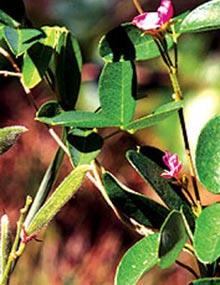
Milkpea is a herbaceous legume with a hairy surface on the top of its trilobed leaf. Stems are also hairy. Seedpods are about 2-1/2 inches long.
Reviewed
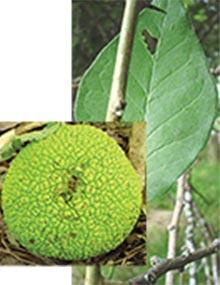
Osage orange grows as a medium-sized tree up to 50 feet tall. It has yellow-green fleshy fruits with a knobby surface that resembles a brain. Its alternate, simple leaves taper to a long, pointed tip.
Reviewed
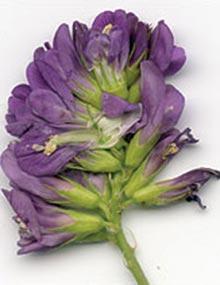
Alfalfa leaves are divided into three leaflets, with the middle leaflet on a distinct stalk. Leaflets are serrated along the outer third to half and are somewhat elongated. Flowers are usually purple, sometimes bluish, rarely white. Fruits are usually curved or twisted.
Reviewed
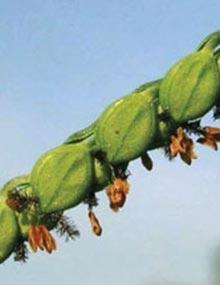
Paspalums seeds are round and flattened and are neatly lined up (but sometimes overlapping slightly) on the seed stalk in two or four rows. Some paspalum species have conspicuous silky hairs at the base of the spikelet.
Reviewed
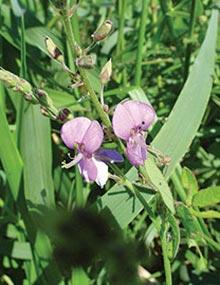
Beggar's lice has triangular seedpods covered with dense hairs that cause them to stick to clothing. During the growing season, it can be recognized by its divided leaf and pink flower.
Reviewed
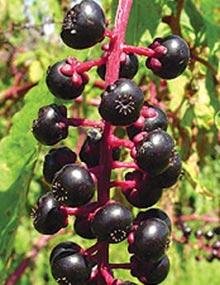
Pokeweed leaves are smooth, oblong and usually 6 to 8 inches in length, though they may grow up to 12 inches. Stems turn bright purple as the plant matures. Clusters of succulent, shiny purple berries, about 1/4 inch in diameter, occur at the tops of the plants.
Reviewed
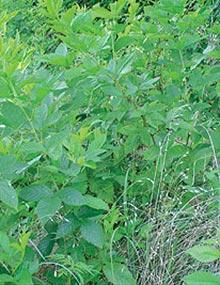
Several briar species grow tall canes that form large thickets of dense, prickly cover. The briars exhibit numerous five-petaled white flowers from April through June.
Reviewed
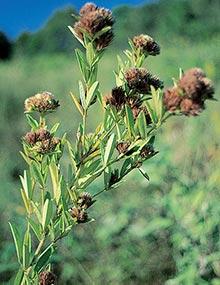
Roundhead lespedeza is a tall perennial plant with reddish-brown seed heads and large leaves. It provides crucial food for bobwhite quail, especially in winter.
Reviewed
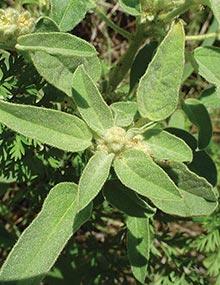
Croton produces abundant seeds and is a common summer weed in pastures and other disturbed areas. A dense covering of white hairs gives croton flowers a fuzzy white appearance.
Reviewed
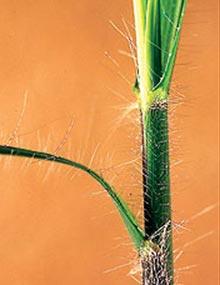
Sideoats grama has fine leaves and widely spaced fine hairs along the leaf edge, especially near the collar. Most sideoats plants are 18-24 inches tall at maturity. It has a unique, oatlike seed that droops slightly off one side of the stalk.

Reviewed
Common elderberry is a shrub that grows to 8 feet tall and forms dense colonies from root sprouts. The tops are multibranched, bearing opposite, pinnately compound leaves 4 to 12 inches long. Lance-shaped leaflets are 2 to 6 inches long, 1 to 2 inches wide and sharply toothed.
Reviewed
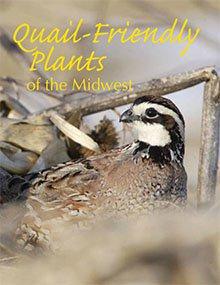
Learn how to identify plants important to bobwhites in the Midwest so that you can critically evaluate the food and cover components of habitat on your land.
Reviewed
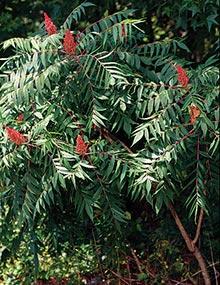
Winged, smooth and staghorn sumac have single stems and a broad reaching canopy of pinnately compound leaves. Fragrant sumac has three leaves resembling poison ivy but with more serrated margins. The leaves of all species often turn a brilliant red in autumn.
Reviewed
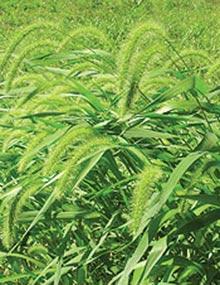
Most of the foxtails found in the Midwest are native to Europe and Asia. They are annual plants generally considered to be weeds. The seed head has the bushy form of a fox's tail. Height at maturity varies by species, but is generally 1-3 feet.
Revised
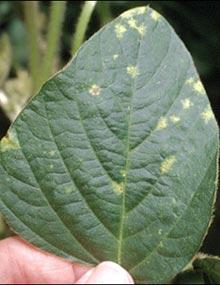
Pale yellow spots on young soybean leaves may signal downy mildew, favored by humid weather and temperatures between 68–72°F.
Revised
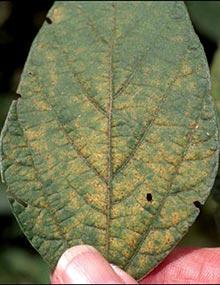
Soybean rust causes lesions on leaves, spreads via windborne spores, and thrives in humid conditions between 46–82°F. It can rapidly defoliate plants.
Reviewed
Infants are most at risk from nitrate-contaminated water, which can lead to serious health issues.
Reviewed
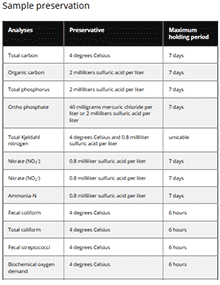
Waste handling systems are used to protect the environment. Visit our site for our Collecting and Preserving Waste and Wastewater Samples for Analysis guide.
Revised
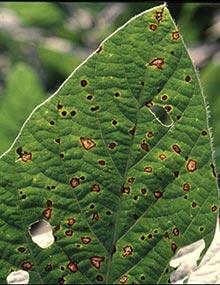
Frogeye leaf spot causes small, circular lesions on soybean leaves. It thrives in warm, humid conditions and survives in infected residue and seed.
Reviewed
Learn the symptoms, development, and management strategies for soybean rust, a destructive disease caused by fungal pathogens that affects soybean crops.
Revised
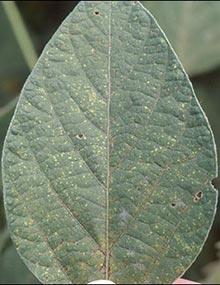
These photos show the disease stages of soybean rust, which can be difficult to identify, especially in the early stages.

Reviewed
Land application of biosolids recycles nutrients, reduces pollution, and follows safety practices to protect soil, crops, and water.
Reviewed
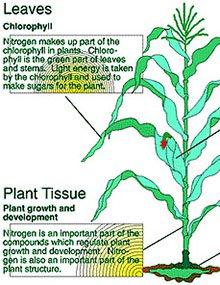
Nitrogen plays an important part in many essential functions. Visit our website to learn about Nitrogen in the Plant.
Reviewed
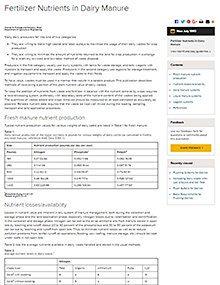
Discover effective strategies for managing dairy manure to optimize nutrient recovery and enhance crop productivity through proper manure handling.