Editor’s note
The following abstract describes a publication that is available for purchase or as a downloadable PDF.
Abstract
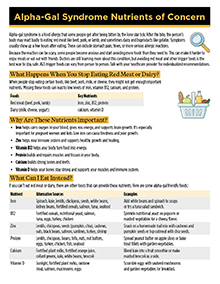
This 8.5x11" handout provides information regarding alpha-gal syndrome food substitutions. Alpha-Gal Syndrome (AGS) is a food allergy caused by lone star tick bites that triggers delayed reactions to red meat and sometimes dairy. Symptoms range from hives to severe reactions. Avoiding trigger foods is key, but eliminating meat or dairy may increase the risk of nutrient deficiencies such as iron, B12, calcium and protein.
Topics
- Nutrients
- Alternative Foods
- Vitamins or Supplements
Pages
- 2

Alpha-gal syndrome is a food allergy that some people get after being bitten by the lone star tick. After the bite, the person’s body may react badly to eating red meat like beef, pork, or lamb, and sometimes dairy and byproducts like gelatin. Symptoms usually show up a few hours after eating. These can include stomach pain, hives, or more serious allergic reactions.
Because the reaction can be scary, some people become anxious and start avoiding more foods than they need to. This can make it harder to enjoy meals or eat out with friends. Doctors are still learning more about this condition, but avoiding red meat and other trigger foods is the best way to stay safe. AGS trigger foods can vary from person to person. Talk with your healthcare provider for individualized recommendations.
What Happens When You Stop Eating Red Meat or Dairy?
When people stop eating certain foods, like beef, pork, milk, or cheese, they might not get enough important nutrients. Missing these foods can lead to low levels of iron, vitamin B12, calcium, and protein.
- Red meat (beef, pork, lamb) – iron, zinc, B12, protein
- Dairy (milk, cheese, yogurt) – calcium, vitamin D
Why Are These Nutrients Important?
- Iron helps carry oxygen in your blood, gives you energy, and supports brain growth. It’s especially important for pregnant women and kids. Low iron can cause tiredness and poor growth.
- Zinc helps your immune system and supports healthy growth and healing.
- Vitamin B12 helps your body turn food into energy.
- Protein builds and repairs muscles and tissues in your body.
- Calcium builds strong bones and teeth.
- Vitamin D helps your bones stay strong and supports your muscles and immune system.
What Can I Eat Instead?
If you can’t eat red meat or dairy, there are other foods that can provide these nutrients. Here are some alpha-gal friendly foods:
-
Iron: Spinach, kale, lentils, chickpeas, seeds, white beans, kidney beans, fortified cereals, salmon, tuna and other seafood.
Tip: Add white beans and spinach to soups or try a tuna salad sandwich. -
Vitamin B12: Fortified cereals, nutritional yeast, salmon, tuna, eggs, turkey and chicken.
-
Tip: Sprinkle nutritional yeast on popcorn or roasted vegetables for a cheesy flavor.
-
Zinc: Lentils, chickpeas, seeds (pumpkin, chia), cashews, oats, black beans, salmon, sardines, turkey and shrimp.
Tip: Snack on homemade trail mix with cashews and pumpkin seeds or top oatmeal with chia seeds. -
Protein: Lentils, chickpeas, beans, tofu, nuts, nut butters, eggs, turkey, chicken, fish and seafood.
Tip: Spread peanut butter on apple slices or bake trout fillets with garden vegetables. -
Calcium: Fortified plant milks, fortified orange juice, collard greens, kale, white beans and broccoli.
Tip: Blend kale into a fruit smoothie or make roasted broccoli as a side. -
Vitamin D: Sunlight, fortified plant milks, rainbow trout, salmon, mushrooms and eggs.
Tip: Scramble eggs with sautéed mushrooms and garden vegetables for breakfast.
Should I Take Vitamins or Supplements?
It’s best to get your nutrients from food, but sometimes supplements can help.
When Should I Consider Supplements?
- Vitamin B12: This vitamin is found in meat and dairy. If you don’t eat those foods, you may need a supplement or eat foods like cereal or plant-based milk that have B12 added. Double check to make sure the vitamin B12 supplement is plant-based.
- Iron: If you don’t eat meat or have low iron, you may need a supplement. Talk to a doctor first, because too much iron can be harmful.
- Vitamin D: If you don’t get much sunlight, especially in the winter, a plant-based vitamin D supplement can help your bones and immune system stay strong.
- Calcium: If you don’t drink milk or eat dairy, you may need calcium to help keep your bones healthy, especially as you get older.
Thinking About Taking Supplements?
Before you start any supplements, talk to your healthcare provider or pharmacist. Some supplements, especially those made with gelatin or in gel-capsules may trigger an AGS reaction. Your pharmacist can help you select ones that are safe for you.
References
- American Society of Hematology. (n.d.). Iron-deficiency anemia. Hematology.org. Retrieved March 3, 2025, View source.
- Centers for Disease Control and Prevention. (2021, March 1). Micronutrient facts. U.S. Department of Health & Human Services. View source.
- Commins, S. P., & Platts-Mills, T. A. E. (2013). Tick bites and red meat allergy. Current Opinion in Allergy and Clinical Immunology, 13(4), 354–359. View source.
- National Center for Biotechnology Information (NCBI). (n.d.). Micronutrient facts. U.S. National Library of Medicine. Retrieved April 21, 2025, View source.
- National Institutes of Health, Office of Dietary Supplements. (2023, January 4). Dietary supplements: What you need to know. U.S. Department of Health & Human Services. View source.