Editor’s note
The following abstract describes a publication that is available for purchase or as a downloadable PDF.
Abstract
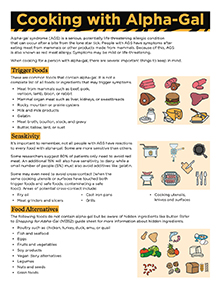
This 8.5x11" handout provides information regarding alpha-gal syndrome. Alpha-gal syndrome (AGS), also known as red meat allergy, is a potentially life-threatening condition triggered by a bite from the lone star tick, causing an allergic reaction to mammalian meat and related products. Cooking for someone with AGS requires careful attention to trigger foods such as beef, pork, dairy, gelatin, and even hidden ingredients in broths or gravies. Sensitivity varies widely among individuals, with some reacting only to red meat while others must avoid dairy, gelatin, or even cross-contact from shared cookware. Safe alternatives include poultry, fish, legumes, plant-based dairy, and other non-mammalian sources of protein. Ensuring adequate protein intake and avoiding cross-contact are critical for safe meal preparation. Open communication about dietary needs, ingredient awareness, and label reading are essential when dining out or cooking for loved ones with AGS. This guide offers practical advice and resources for managing AGS through informed food choices and careful kitchen practices.
Topics
- Trigger Foods
- Sensitivity
- Food Alternatives
- Meeting Protein Needs
- Communication About Allergies
- Cooking for Loved Ones
Pages
- 2
Alpha-gal syndrome (AGS) is a serious, potentially life-threatening allergic condition that can occur after a bite from the lone star tick. People with AGS have symptoms after eating meat and other products from mammals (cows, pigs, sheep, goats, rabbits). Because of this, AGS is sometimes called red meat allergy. Some people with AGS are also allergic to dairy and mammal byproducts. Symptoms may range from mild to life-threatening.
When cooking for a person with AGS, there are several important things to keep in mind.
Trigger Foods
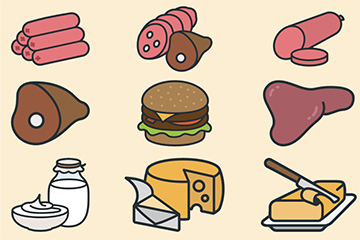
This is not a complete list. Other foods or ingredients may also trigger symptoms.
- Meat from mammals such as beef, pork, venison, lamb, bison, goat or rabbit
- Mammal organ meat such as liver, kidneys or sweetbreads
- Rocky mountain or prairie oysters
- Milk and dairy products (ice cream, yogurt, butter, cheese)
- Gelatin
- Meat broth, bouillon, stock, and gravy
- Butter, tallow, lard, or suet
Sensitivity
 It’s important to remember, not all people with AGS have reactions to every food with alpha-gal. Some are more sensitive than others.
Most people with AGS need to avoid red meat. Some also have sensitivity to dairy and dairy products. A small number must also avoid byproducts like gelatin.
Some may even need to avoid cross-contact (when the same cooking utensils or surfaces have touched both trigger foods and safe foods, contaminating a safe food). Areas of potential cross-contact include:
- Fry oil
- Meat grinders and slicers
- Cast iron pans
- Grills
- Cooking utensils, knives and surfaces
Food Alternatives
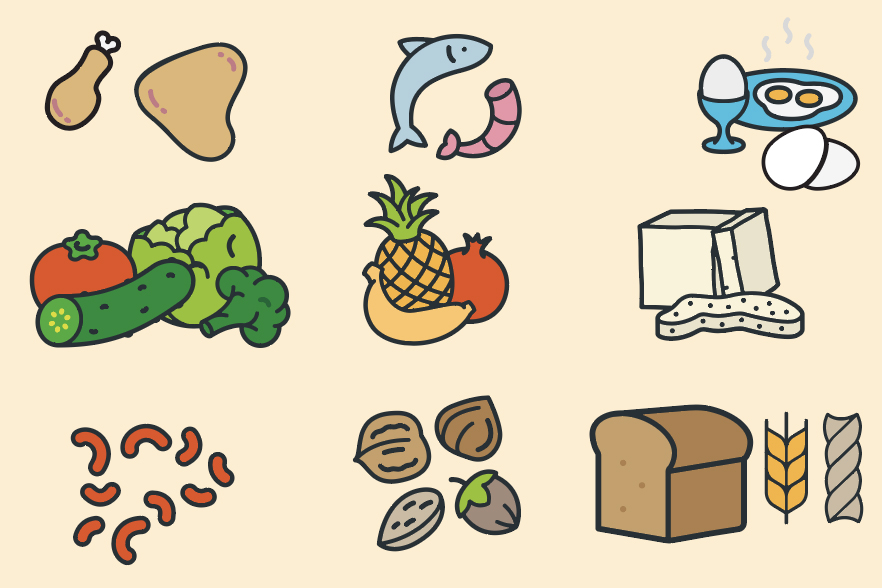
The following foods do not contain alpha-gal but be aware of hidden ingredients. Refer to Shopping for Alpha-Gal Syndrome (N1352) guide sheet for more information about hidden ingredients. Alpha-gal sensitivity varies from person to person. Consult with your healthcare provider or registered dietitian to determine which specific foods need to be avoided and to develop a safe eating plan tailored to your needs.
- Poultry such as chicken, turkey, duck, emu, or quail
- Fish and seafood
- Eggs
- Fruits and vegetables
- Soy products
- Vegan dairy alternatives
- Legumes
- Nuts and seeds
- Grain foods
Meeting Protein Needs
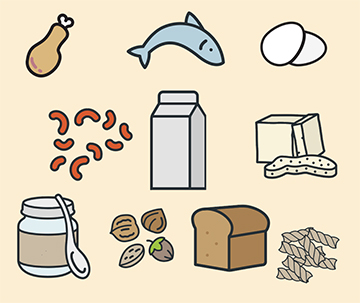
Some people may be concerned about getting enough protein if they must avoid red meat. Fortunately, most people can easily get enough protein. Adults should aim for 50-120 grams of protein a day. This should be split up evenly throughout the day. The table below lists foods that can help meet protein needs.
Foods and Their Protein Content (per serving):
- Palm-sized portion of chicken: 23 grams
- Palm-sized portion of fish: 19 grams
- 1 large egg: 6 grams
- ½ cup cooked beans or lentils: 7–9 grams
- 1 cup soy milk: 7 grams
- ½ cup tofu: 10–12 grams
- 2 tablespoons peanut butter: 7 grams
- ¼ cup nuts: 4–6 grams
- 1 slice bread: 3 grams
- 1/3 cup rice or pasta: 3 grams
Communicating About Allergies

When going out to eat, tell your server about foods and food ingredients that may trigger an AGS reaction. For more tips on dining out, check out the resources available from Food Allergy Research & Education (FARE).
Make an easy-to-read list with allergen information to take to public places when eating.
Talk with your loved ones about AGS and make sure they understand your dietary restrictions and the risks.
Cooking for Loved Ones

Talk with loved ones with AGS about foods that trigger reactions and brainstorm alternatives to prepare.
Communicate about their level of comfort with trying different foods or food ingredients that may contain alpha-gal to determine tolerance.
Learn about alpha-gal foods and ingredients, and read food labels every time.
References
- CDC. (2024). Products That May Contain Alpha-Gal. Alpha-Gal Syndrome. View source.
- Forsyth, S. (2022). Cross Contamination (Cross Contact): A Guide for People with Alpha Gal Syndrome. Alpha Gal Information. View source.
- Macdougall, J.D., Thomas, K.O., & Iweala, O.I. (2022). The Meat of the Matter: Understanding and Managing Alpha-Gal Syndrome. ImmunoTargets and Therapy, 11, 37-54. View source.