Annual warm-season grasses are valuable components of year-round grazing systems in Missouri. When adequate moisture and fertility are available, they produce large quantities of high-quality forage during late spring and summer, when cool-season perennials typically decline in productivity. These species also fit well in rotations with row crops and serve as effective emergency forage options.
Common annual warm-season grasses used in Missouri include pearl millet (Pennisetum glaucum), sorghum–sudangrass hybrids (Sorghum bicolor × S. sudanense), and crabgrass (Digitaria sanguinalis and D. ciliaris). With proper supplementation and management, livestock gains of approximately 1.5 to 2.0 pounds per day are achievable on well-managed stands of sorghum–sudangrass, pearl millet, or crabgrass.
Facts at a glance
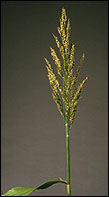
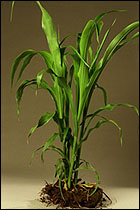
- Common names
Sudangrass, sorghum-sudangrass, forage sorghum - Origin
Northeastern Africa - Adaptation to Missouri
Statewide - Growth habit
Tall, upright - Tolerance to drought
Good - Tolerance to poor drainage
Good - Cultivars
Several proprietary hybrids and brown midrib types are available — see your seed dealer for options - Ease of establishment
Easy - Seeding rates
20 to 25 pounds per acre drilled; 30 to 35 pounds per acre broadcast - Seeding dates
May 1 to June 30 - Preferred seeding depth
1/2 to 1 inch - Days from seeding to first grazing
45 to 60 - Preferred soil pH
5.5 or higher - Fertilization
60 to 90 pounds of N per acre at establishment. Apply 40 to 60 pounds of N after each cutting or grazing thereafter. P and K to soil test. - Timing of production
90 percent of production occurs in June, July and August - When to begin grazing
When it reaches 24 inches
(Note: To avoid prussic acid poisoning, do not graze when it is shorter than 24 inches. It is also best to delay grazing for 14 days after frost or drought stress.) - When to cut for hay
When it reaches 30 to 36 inches - Lowest cutting or grazing height
10 inches - Suitability for wildlife cover
Poor
Sorghum–Sudangrass and Sudangrass
True sudangrass was widely used historically, but most producers now prefer sorghum–sudangrass hybrids because of their improved yield potential and leafiness. These hybrids were developed by crossing forage sorghum with sudangrass to combine the high biomass production of sorghum with the finer stems and regrowth capacity of sudangrass. Forage sorghums are typically taller and more stemmy and should not be confused with grain sorghum (milo), which was bred for short stature and high grain yield.
Variety selection
Yield differences among modern sudangrass and sorghum–sudangrass cultivars are generally modest under similar management. Differences in performance are often driven more by moisture availability and management than by genetics. Brown midrib (BMR) hybrids are widely available and typically offer improved fiber digestibility and animal performance, though often with slightly lower tonnage and higher seed cost. Select varieties based on:
- Intended use (grazing vs. hay or baleage)
- Presence of the BMR trait
- Seed cost and availability
- Local performance data when available
The older cultivar ‘Piper’ is still available but has largely been replaced by improved hybrids.
Establishment
Sorghum–sudangrass is sensitive to low soil pH and should be planted on soils with pH ≥ 5.5 (preferably 6.0 or higher).
Recommended seeding rates
- Drill: 20–25 lb/acre
- Broadcast: 30–35 lb/acre
- Row spacing: 7–15 inches
- Planting window: mid-May through June, after soil temperatures reach ~60°F
No-till establishment is effective when existing vegetation is properly controlled with burndown herbicides.
Pearlmillet at a glance
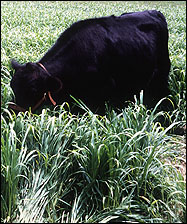
- Common name
Pearlmillet - Origin
North-central Africa - Adaptation to Missouri
Statewide - Growth habit
Tall, upright, tillering - Tolerance to drought
Excellent - Tolerance to poor drainage
Good - Cultivars
Tifleaf I, Tifleaf II, Mil-Hy-300, Sunny State, Tifleaf III, PP102M - Ease of establishment
Easy - Seeding rates
15 pounds per acre drilled; 20 to 30 pounds per acre broadcast - Seeding dates
May 1 to June 15 - Preferred seeding depth
3/4 to 1 inch - Days from seeding to first grazing
45 to 60 - Preferred soil pH
Higher than 5.0 - Fertilization
60 to 90 pounds of N per acre at establishment. Apply 40 to 60 pounds of N after each cutting or grazing thereafter. P and K to soil test. - Timing of production
90 percent of production occurs in June, July and August - When to begin grazing
When it reaches 18 to 30 inches - When to cut for hay
When it reaches 36 inches - Lowest cutting or grazing height
8 inches - Suitability for wildlife cover
Poor
Pearl millet
Pearl millet is an excellent warm-season annual for pasture systems because it tolerates acidic soils and drought conditions better than sorghum–sudangrass. Importantly, pearl millet does not produce prussic acid, making it a lower-risk option for grazing management.
Other millets (foxtail, proso, German) are sometimes used for hay or silage but generally provide less total forage and a shorter grazing season than pearl millet.
Establishment
- Drill: ~15 lb/acre
- Broadcast: 20–30 lb/acre
- Planting window: May 1 to mid-June
- Soil temperature: ≥ 65°F
Planting before the onset of summer heat is recommended because establishment success declines as rainfall probability decreases later in the season.
Variety selection
Yield differences among modern pearl millet cultivars are typically small. Select based on seed cost, availability, and intended use (grazing vs. hay). Leafy, grazing-type varieties are generally preferred for pasture systems.
Crabgrass at a glance
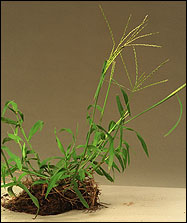
- Common name
Crabgrass - Origin
Southern Africa - Adaptation to Missouri
Statewide - Growth habit
Sod forming - Tolerance to drought
Fair - Tolerance to poor drainage
Poor - Cultivars
Red River, Common - Ease of establishment
Easy - Seeding rates
3 to 4 pounds per acre - Seeding dates
May 1 to May 31; can be overseeded into winter annual grasses from late winter to early spring - Preferred seeding depth
1/4 to 1/2 inch - Days from seeding to first grazing
30 to 45 - Preferred soil pH
5.5 or higher - Fertilization
40 pounds of N per acre at establishment. Apply 60 pounds of N after first cutting or grazing. P and K to soil test. - Timing of production
80 percent between mid-June and August - When to begin grazing
Before it reaches 8 to 10 inches - When to cut for hay
Boot stage, approximately 10 to 12 inches - Lowest cutting or grazing height
3 inches - Suitability for wildlife cover
Poor
Crabgrass
Although often viewed as a weed in row-crop systems, improved crabgrass varieties provide excellent high-quality summer forage. Interest in crabgrass has increased substantially in Missouri because it:
- Establishes easily
- Produces highly digestible forage
- Works well in double-crop systems
- Does not produce prussic acid
With good moisture and management, crabgrass can produce approximately 4,000 to 8,000 lb dry matter per acre, and improved cultivars (e.g., ‘Red River’, ‘Quick-N-Big’) can exceed this under favorable conditions.
Establishment
- Seeding rate: 3–5 lb/acre (pure live seed)
- Planting window: April to early May
- Seeding depth: ≤ 1/4 inch
- Method: broadcast and lightly incorporate or no-till drill
Because seed is very small and lightweight, uniform distribution during broadcasting is critical.
Natural reseeding
Crabgrass can persist through annual reseeding if managed properly.
To encourage reseeding:
- Remove livestock at least 3 weeks before the first killing frost
- Allow seedheads to mature
- Lightly disturb soil in late April or early May the following spring
- Apply ~40 lb N/acre at green-up
Grazing management
Rotational grazing is strongly recommended.
- Begin grazing: 8–10 inches tall
- Stop grazing: leave ≥ 3 inches stubble
Well-managed crabgrass pastures commonly support beef gains up to about 2.0–2.25 lb/day.
Harvest management
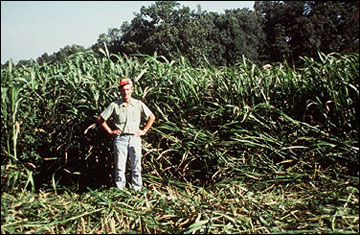
Hay curing can be challenging for pearl millet and sorghum–sudangrass because of their large stems. Using a mower-conditioner to crush stems is essential to speed drying.
Sorghum-sudangrass
- Harvest height: 24–36 inches
- Stubble height: 6–10 inches (≈10 inches preferred for rapid regrowth)
- Expected yield: 4–8 tons forage per acre under good conditions
Allowing excessive maturity reduces forage quality. Crude protein may decline from 12–14% in vegetative growth to 6–8% at the dough stage. BMR hybrids generally provide higher digestibility due to reduced lignin concentration.
Pearl millet
Management is similar to sorghum–sudangrass but with one key difference: pearl millet relies more heavily on terminal buds for regrowth.
- Recommended stubble: 8–12 inches
- Regrowth: slower than sorghum–sudangrass
- Sensitive to cool weather
Key hay-making tips
- Always use a mower-conditioner
- Apply aggressive roller pressure
- Allow swath tops to dry before windrowing
- Bale at 15–18% moisture
Because of curing challenges, grazing or baleage is often more reliable than dry hay.
Soil fertility
Soil testing should guide phosphorus, potassium, and lime applications prior to planting.
Nitrogen guidelines
Sorghum–sudangrass and pearl millet
- Initial application: 60–90 lb N/acre
- After first grazing or cutting: 40–60 lb N/acre
- Use split applications to improve efficiency and reduce nitrate toxicity risk
Although these crops may respond to very high nitrogen rates, economic and environmental efficiency typically declines at excessive rates.
Crabgrass
- Typical annual N: 70–100 lb/acre
- Split application recommended:
- Half at green-up
- Half in early July
Livestock toxicities
Nitrate toxicity
Nitrate accumulation is most likely when:
- Heavy nitrogen fertilization is followed by drought
- Growth is slowed by cloudy, cool weather
- Plants experience stress that limits growth but not nitrate uptake
Nitrates concentrate in the lower stem. Avoid forcing animals to graze stems closely when risk is elevated.
General risk guidelines (dry matter basis)
- <0.25% nitrate (2,500 ppm): generally safe
- 0.25–0.5%: limit in ration
- 0.5–1.5%: dilute carefully and supplement energy
- 1.5% (15,000 ppm): potentially toxic
Nitrates persist in hay and silage. Test suspect forage, especially for pregnant or young animals.
Maintaining soil pH in the recommended range improves molybdenum availability and supports normal nitrate metabolism in plants.
Table 1. Warning levels for forage nitrate content.
| Nitrate concentration | Risk status | Comments | |
|---|---|---|---|
| 0 to 0.25 percent | 0 to 2,500 ppm | SAFE | Forage is generally safe to feed at these levels to all classes of livestock. |
| 0.25 to 0.50 percent | 2,500 to 5,000 ppm | CAUTION | Forage with this nitrate (NO3) content can cause a problem with pregnant and young animals. Do not feed forage with nitrate levels this high in combination with nonprotein nitrogen supplements, and limit forage with NO3 levels this high to one-half of total ration. |
| 0.50 to 1.5 percent | 5,000 to 15,000 ppm | DANGER | Limit forage with this NO3 level to one-fourth of total ration. Should supplement forage of this type with energy, minerals and vitamin A. |
| Over 1.5 percent | More than 15,000 ppm | TOXIC | Forage with this NO3 level or higher is toxic and should not be fed under any circumstance. If forage with this NO3 concentration must be fed, it should be mixed with other feed and make up no more than 15 percent of the total ration. |
Prussic Acid (Cyanide) — Sorghum–Sudangrass
Pearl millet and crabgrass do not produce prussic acid.
Prussic acid risk increases when sorghum-family plants are:
- Frost damaged
- Drought stressed
- Rapidly regrowing after cutting
- Very young and leafy
Management guidelines:
- Do not graze until plants reach ≥ 24 inches tall
- After drought stress, wait for full recovery and adequate regrowth
- After a killing frost, wait at least 10–14 days and until leaves are fully dry and brown
- Exercise extra caution with regrowth
Unlike nitrates, prussic acid dissipates during proper hay curing or ensiling.
Rapid field test kits (picrate strips or commercial assays) can help assess risk when conditions are suspect.
Bottom line: Annual warm-season grasses remain highly effective tools for filling the summer forage gap in Missouri. With modern hybrids, improved grazing management, and careful attention to fertility and toxicity risks, producers can reliably achieve high forage yields and strong livestock performance.