Parks are the hearts of communities. These public green spaces increase social cohesion and belonging; offer opportunities for volunteerism, civic engagement and leadership development; and contribute to a community's vitality, resilience and wellbeing. Many parks go unnoticed or underutilized; their potential for catalyzing community development unrealized. In 2021, more than 100 million Americans, including 28 million children, did not have a park within a 10-minute walk of home.
Raising awareness of their value is key to protecting, maintaining and sustaining these vital public resources. By promoting parks, raising awareness, and reinforcing their value, we ensure these spaces remain vibrant for everyone to enjoy and inspire return visits. The more people recognize these benefits, the more they advocate for preservation and improvement, ensuring these treasured community resources continue to bring value to future generations. This guide highlights the benefits of public parks and provides a roadmap to unlock their power as tools for community development.
Vitality: healthy, active, resilient communities
Individual benefits
Research demonstrates that proximity to and use of parks is typically associated with higher levels of physical activity. For example, higher rates of physical activity have been observed among residents living within 500 meters (roughly one-third of a mile) of a local park than among those further away. Additionally, park users are generally more active than non-users across all categories of physical activity, except when walking for commuting purposes. High levels of physical activity are also associated with reduced risk of cardiovascular disease, type 2 diabetes and a variety of cancers. In particular, alleviation of allergic respiratory and cardiovascular conditions, and increased psychological wellbeing have been documented among park users. Further, research demonstrates that frequent park visits have been shown to significantly reduce asthma risk. Other research found consistent negative associations between urban green space exposure and mortality, heart rate, and violence; and positive association with attention, mood, and physical activity. When the recreational opportunities of parks are promoted through active communications, they can have a significant positive impact on community health.
Parks also provide mental health benefits by alleviating attentional demands and reducing chronic stressors. Research has demonstrated that residents within walking distance of local parks (< 400m) received the highest Mental Health Index (MHI-5) scores—indicating no mental health problems—with scores decreasing significantly for residents living farther away. Further, research confirms that parks reduce stress; with benefits extending to a month following visit and increasing with visit frequency and visitor age.
Park access and size are both factors in the potential health benefits afforded by public green spaces. Greater prevalence of hiking urban trails are associated with higher proportions of physically active adults. Modest increases in park size (~2.5 acres) are associated noticeable improvements in community physical health. Parks offering regularly scheduled opportunities for physical activity can also help reduce individual health care costs. For example, a 1% increase in the physical activity rate might realize a savings of $153,200 to $207,900 in older adults’ healthcare costs.
Environmental and economic benefits
The physical and mental health benefits of parks are associated with significant economic value through reductions in health expenditures. Parks can reduce harm from environmental exposures such as air, noise and light pollution, and offer refuge from extreme heat—particular concerns for urban communities.
They provide additional economic value through flood mitigation, carbon sequestration and improvements to air and water quality. Further, the addition of a new park has the potential to raise nearby property values. For example, home values within one-third of a mile of the High Line Park in New York City increased by 10% immediately following its opening in 2009. This increase in property values can spur additional economic development but must be managed alongside factors like housing affordability and small business supports to limit displacement of low-income residents from potential gentrification. These factors all have the potential to significantly contribute to a community’s resilience and longevity.
Belonging: community, cohesion and attachment
Green spaces build social cohesion and belonging. Parks inculcate positive social ties, trust, and a sense of community. They also provide opportunities for casual get-togethers and social interaction contributing to shared norms and stress reduction. Functioning as “third places”—social environments away from home (1st place) and work (2nd place)—parks afford communities a venue where residents can mingle, form relationships, and feel included.
Parks, in this way, also foster a sense of attachment to place. Research consistently finds a positive relationship between interaction with parks and residents’ sense of belonging and community identity. A vibrant park system can also foster a sense of belonging amongst migrants and newcomers when relocating to a new community; easing their transition and spurring acclimation.
Contribution: volunteering and civic engagement
Communities with better park systems have higher levels of social capital; the relationships between individuals. A 2025 US Forest Service analysis connecting ParkScore® to the Social Capital Atlas found cities with higher-quality parks show higher neighborly engagement civic connectedness. High levels of social capital and connectedness in community can create access to other forms of capital and support local economic development.
Communities that actively promote parks see higher rates of volunteerism and stewardship, particularly in under-resourced areas. Friend groups, advisory councils and paid resident liaisons can all be effective actors in highlighting the vitality of parks as vehicles for contribution and civic engagement.
Further, communities can also harness the power of their by including residents in decision-making and interventions related to parks. Research shows that community-devised interventions increase park use among residents and provide a useful template for civic engagement that can be leveraged towards further community development efforts.
Leadership: youth development and empowerment
Parks can also foster leadership development and civic engagement through youth-based programs. Research consistently demonstrates that participation in outdoor park-based leadership programs leads to gains in youth voice, confidence and empowerment.
When paired with youth-based interventions to improve health behaviors, park-based youth leadership programs can be an effective way to promote positive social emotional development and establish healthy lifestyles. These types of interventions have the potential to bring life-long benefits—such as reduced medical expenditures— resulting from the healthy habits and lifestyles developed by participants early in life.
Park design best practices: Maximizing community benefits
The National Parks Service (NPS) offers a workbook to help communities design parks that will increase residents’ physical activity, support mental health and foster community and social interactions. Thoughtful design can help communities maximize the value of their parks.
Local parks are at their most impactful when they are made accessible to all age groups, cultures, and ability levels. Making sure parks are ADA compliant and accessible by public transportation can help in this pursuit. Further, offering diverse recreation amenities with varying levels of difficulty can attract a wide range of visitors to local parks throughout the year.
Park entrances should be designed to promote universal entry and encourage the use of active modes of transportation such as walking or biking. Fun, informative signage about exercise and healthy lifestyles for youth and adults can further encourage increased physical activity.
Access to drinking water, seating and shade are also crucial elements to good park design. These amenities help support physical activity by offering opportunities for comfortable respite while exercising. When combined with facilities that can support activities like classes, events and clubs, these conveniences make parks attractive places to gather.
Finally, pursuing partnerships with hospitals, insurers, local businesses or other organizations on health initiatives or improvements in local parks can help ensure the park is seen, and used, as a resource for residents to pursue more active lifestyles. One way to highlight the value of local parks is to invite community leaders on a walk.
A Walk in the Park – A community engagement initiative
Walking with community leaders through local parks offers a refreshing way to foster genuine connections outside the confines of formal meetings. These shared walks invite open dialogue, helping bridge the gap between decision-makers and the communities they serve. The walk-and-talk format offers a relaxed, enjoyable way to connect—sparking conversations that uncover each person’s role, revealing shared interests, and opening the door to potential future collaboration.
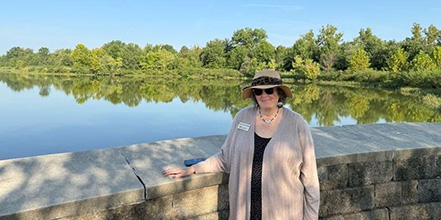
Capturing and sharing moments from these walks—through photos and stories—amplifies public appreciation for parks and fosters collaboration between community leaders, residents, and business owners. Publicity efforts provide valuable exposure for local parks and open doors for future collaborations.
Background
The “A Walk in the Park” community engagement initiative expands on these efforts by inviting not just elected officials; but leaders, members of the local Chamber of Commerce, hospital leadership and large nearby employers; on walking tours of local parks—offering a venue to discuss the benefits of parks while actively enjoying them.
In 2018, 225 mayors across the United States signed on to the “10-Minute Walk Campaign”—a partnership between the Trust for Public Land, the Urban Land Institute and the National Recreation and Park Association (NRPA). Recognizing that one in three Americans didn’t access to a park within a 10-minute walk, this campaign seeks to address this disparity by raising awareness among local elected officials of myriad benefits of public parks.
The NRPA established October 10 as “National Walk to a Day” to draw attention to the importance of having quality parks near home and encourage citizens and elected officials to engage in conversations, collaborations and partnerships that will increase access to parks.
Outcomes
Walking through parks with community leaders is more than leisurely stroll—it’s a powerful step toward openness, partnership, and community well-being. These walks shift the idea of leadership from behind closed doors to the heart of everyday life, where people gather, play, and connect. Beyond the physical and mental health benefits, walking side by side leads to meaningful dialogue and shared understanding. As leaders experience each park’s unique features, gain a deeper appreciation for the spaces that help define and enrich neighborhood life.
Steps to organize park walks with local leaders
Select your location
Begin by choosing a community to spotlight, then identify a park within your region—county, municipal, or state parks are all great options.
Engage a community leader
Extend an invitation to local and state elected officials, business leaders, Parks Department representatives, community leaders, and law enforcement officers to join you for a walk through the park. Walks can be one-on-one or with a group of community members. Encourage guests to wear casual, comfortable attire suitable for a relaxed outdoor setting.
Share the purpose of the walk: to highlight the park’s value and celebrate the role of community resources. Emphasize that this is an informal opportunity to connect, enjoy the natural surroundings, and spark conversations about potential collaborations to bring programs and services to the community.
Schedule thoughtfully
Flexibility is key—scheduling walks year-round at times that suit both the host and participants helps encourage stronger turnout and more meaningful engagement. Prioritizing convenience for everyone involved makes the experience more enjoyable and inclusive.
Capture and share the experience
Document the highlights of your park visit by photographing key features such as trails, lakes, playgrounds (including children with proper permission), pavilions, ball fields, and other scenic spots. Snap a few candid shots of your guest(s) enjoying the park to help tell the story.
Share the experience on your social media platforms, including a brief write-up about the visit. Be sure to tag your guest(s) and their organization and encourage them to reshare the post. Offer to provide them with access to all the photos for their own use.
Afterward, follow up with a thank-you note and include any outcomes, ideas, or next steps that emerged from your time together. It’s a great way to keep the momentum going and strengthen the connection.
References
Chapman, R., Foderaro, L., Hwang, L., Lee, B., & Muqueeth, S. (2021, May 27). Parks and an Equitable Recovery - A Trust for Public Land special report. Trust for Public Land.
Jennings, V., & Bamkole, O. (2019 ). The relationship between social cohesion and Urban Green Space: An avenue for health promotion. International Journal of Environmental Research and Public Health, 16(3), 452.
Twohig-Bennett, C., & Jones, A. (2018). The health benefits of the great outdoors: A systematic review and meta-analysis of greenspace exposure and health outcomes. Environmental Research, 166, 628–637.
Liu, H., Li, F., Li, J., & Zhang, Y. (2017). The relationships between urban parks, residents’ physical activity, and mental health benefits: A case China. Journal of Environmental Management, 190, 223–230.
Mytton, O. T., Townsend, N., Rutter, H., & Foster, C. (2012). Green space and physical activity: an observational study using Health Survey for England data. Health & Place, 18(5), 1034–1041.
Nguyen, P.-Y., Astell-Burt, T., Rahimi-Ardabili, H., & Feng, X. (2021). Green Space Quality and Health: A Systematic Review. International Journal of Environmental Research and Public Health, 18(21), 11028.
Jing, F., Ma, W., Li, Z., Zhou, S., Ruan, Y., He, G., Hu, J., & Liu, T. (2025). Nationwide analysis of the association between Nature Park visits and adult asthma urbanized neighborhoods. Cities, 166.
Kondo, M. C., Fluehr, J. M., McKeon, T., & Branas, C. C. (2018). Urban Green Space and Its Impact on Human Health. International Journal of Environmental Research and Public Health, 15(3), 445.
Bazrafshan, M., Mikaeili Tabrizi, A., Bauer, N., & Kienast, F. (2021). Place attachment through interaction with urban parks: A cross-cultural study. Urban Forestry & Urban Greening, 61, 127103.
Sturm R, Cohen D. (2014). Proximity to urban parks and mental health. J Ment Health Policy Econ, 17(1):19-24. PMID: 24864118; PMCID: PMC4049158.
He, J., Li, L., & Li, J. (2022). Generating inclusive health benefits from urban green spaces: An empirical study of beijing olympic forest park. Buildings, 12(4), 397.
Rosenberger, R.S.; Bergerson, T.R.; Kline, J.D. (2009). Macro-linkages between health and outdoor recreation: the role of parks and recreation providers. Journal of Park and Recreation Administration. 27(3): 8-20
Lee, L. H., Haque, A., Cui, J., Smith, A., Mancus, G., Yi, N., & Yuen, H. K. (2025). Examining the indirect effect of Park Size on community health via crime Alabama: A cross-sectional mediation model. Health & Place, 92, 103423.
Sato, M., Inoue, Y., Du, J., & Funk, D. C. (2019). Access to parks and recreational facilities, physical activity, and health care costs for older adults: U.S. counties. Journal of Leisure Research, 50(3), 220–238.
Rosenberger, R.S. et. al. Macro-linkages between health and outdoor recreation: the role of parks and recreation providers.
Mueller, J. T., Park, S. Y., & Mowen, A. J. (2019). The relationship between parks and recreation per capita spending and mortality from 1980 to effects model. Preventive Medicine Reports, 14, 100827.
Wilson, J., & Xiao, X. (2023). The Economic Value of Health Benefits Associated with Urban Park Investment. International journal of environmental research and public health, 20(6), 4815.
Browning, M. H., Rigolon, A., & McAnirlin, O. (2022). Where greenspace matters most: A systematic review of urbanicity, greenspace, and physical health. Landscape and urban planning, 217, 104233
Levere, M. (2014, December 20). The high line park and timing of capitalization of public goods. CompleteGeorge.
Kim, S. K., & Wu, L. (2021). Do the characteristics of new green space contribute to gentrification? Urban Studies, 59(2), 360–380.
Cohen, M., Burrowes, K., & Gwam, P. (2022, February). Research report the health benefits of parks and their economic impacts. The Urban Institute.
Qi, J., Mazumdar, S. & Vasconcelos, A.C. Understanding the Relationship between Urban Public Space and Social Cohesion: A Systematic Review. Int. Journal of Com. WB 7, 155–212 (2024).
Bazrafshan, M., et. al. Place attachment through interaction with urban parks: A cross-cultural study.
Asikainen, H., & McAreavey, R. (2025). ‘We are here our hearts are there’: Rurality, belonging and walking together. Sociologia Ruralis. Advance online publication.
Klein, W. P., Locke, D. H., Niu, K., & Frumkin, H. (2025). Parks and social capital: An analysis of the 100 most populous US cities. Urban Forestry & Urban Greening.
Derose, K. P., Marsh, T., Mariscal, M., Pina-Cortez, S., & Cohen, D. A. (2014). Involving community stakeholders to increase park use and physical activity. Preventive Medicine, 64, 14–19.
Derose, K. P., et. al. Involving community stakeholders to increase park use and physical activity.
Roberts, N. S., & Suren, A. T. (2010). Through the eyes of youth: A qualitative evaluation of outdoor leadership programs. Journal of Park and Recreation Administration, 28(4), 59-80.
Wallace, D. D., Han, B., Cohen, D. A., & Derose, K. P. (2022). The effects of park-based interventions on health-related outcomes among youth: a systematic review. American Journal of Health Promotion, 36(6), 1029-1044.
Cohen, M., Burrowes, K., & Gwam, P. (2022). The health benefits of parks and their economic impacts. Washington, DC: Urban Institute.
O’Hara, K. (2018, October 1). How many mayors does it take to make a movement? Advocacy: Parks and Recreation Magazine. National Recreation and Park Association.