Growing plants teaches kids more than just gardening skills.
-
Image
 Kids looking for beetles in the green beans. Photo by Donna Aufdenberg.
 -
Image
 Making a fairy garden. Photo by Donna Aufdenberg.
 -
Image
 Making seed tapes for spring. Photo by Donna Aufdenberg.
 -
Image
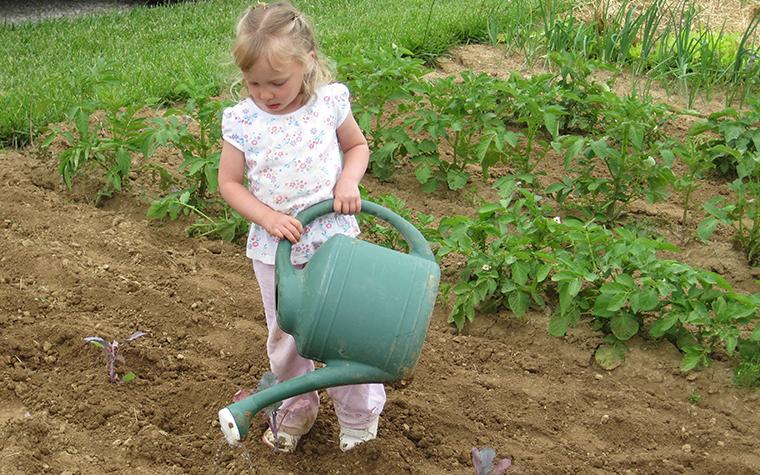 Watering flowers with a watering can. Photo by Donna Aufdenberg.
Writer: Michelle Enger
JACKSON, Mo. – Donna Aufdenberg gets energized sharing the variety of skills children learn when gardening.
“We can teach a lot through gardening,” said Aufdenberg, a University of Missouri Extension horticulture specialist in Cape Girardeau County. “So many activities that are, yes, gardening, but are also math- or art-oriented.”
Learning how to space plants teaches measurement. Plant varieties showcase colors and shapes. Kids can show off their artistic flair by painting rocks for plant markers or by decorating clay pots. Fairy gardening takes the creativity to another level, building a tiny world with hand-painted figurines and handcrafted bridges, for example.
Of course, it is also about helping your children understand and appreciate producing food they can eat and tending flowers they can enjoy.
Aufdenberg has created a series of MU Extension publications about youth gardening activities. Subjects include Making Seed Tapes, Designing a Butterfly Garden and The Cut Flower Garden.
Making seed tapes is one of her favorite youth gardening activities. It involves “gluing” seeds to paper with a flour/water mixture at the spacing suggested on the seed packet. The paper strips can then be stored in a plastic bag when dry until it’s time to plant them outdoors. Aufdenberg likes that it’s a two-step process that starts indoors in winter and then transitions to the garden come spring.
Planting seeds in small cups/containers is also a rewarding experience for children, she said.
“They can watch the process up close and personal,” Aufdenberg said. “Kids love to have ownership, too; that’s the other part of it. If they can say, ‘That pot is mine,’ they love that.”
She recommends tough and fast-growing flowers like zinnias or marigolds, and vegetables such as radishes, mini carrots and sugar snap peas for young, first-time growers. “Kids don’t want to have to wait,” she said.
An area dedicated to cut flowers at the edge of the garden is ideal for kids to both learn about pollinators and be able to cut their own stems for a small bouquet.
Planting a salad box is another good project for youth gardening, Aufdenberg said. All it takes is a plastic or wooden frame with holes drilled in it, 2-3 inches of soil, and lettuce, mini carrot or radish seeds. Kids can choose from a variety of radish colors.
And don’t forget smaller tools and a watering can for smaller hands.
Photos
Kids looking for beetles in the green beans. Photo by Donna Aufdenberg.

Making fairy garden. Photo by Donna Aufdenberg.

Making seed tapes for spring. Photo by Donna Aufdenberg.

Watering flowers with a watering can. Photo by Donna Aufdenberg.
