July 26 is Turnip Day in Missouri
-
Image
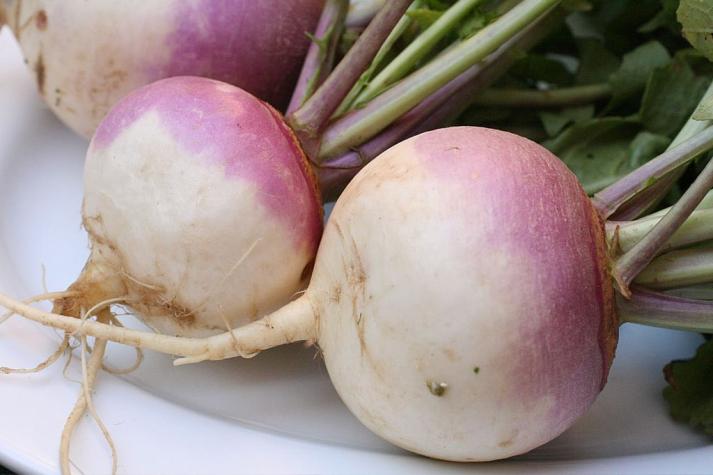 Turnips. Photo by thebittenword.com, CC BY 2.0 (https://creativecommons.org/licenses/by/2.0), via Wikimedia Commons.
COLUMBIA, Mo. – There is an old Missouri saying, “On the 26th of July, sow your turnips, wet or dry.” This local proverb vaulted into the national spotlight during the presidency of Missouri native Harry S. Truman, said University of Missouri Extension state specialist David Trinklein.
The congressional session of 1948 was particularly rancorous, with the GOP-dominated Congress refusing to pass any of President Truman’s initiatives. In reprisal, Truman called a two-week special session to deal with matters Congress had refused to address before adjourning for the summer. The President proposed that it should begin on “what we in Missouri call Turnip Day—July 26.”
The tactic did not work: Congress still refused to pass any of President Truman’s initiatives in what historians refer to as the Turnip Day Session, which ran July 26-Aug. 3. However, it did bring to the attention of the American public that, at least in Missouri, late July is a good time to plant turnips.
“Turnip is underappreciated as a fall vegetable crop,” said Trinklein.
Turnip (Brassica rapa subsp. rapa) is a member of the Brassicaceae (mustard) family and has been grown since prehistoric times. Roman naturalist and philosopher Pliny the Elder called it “animal fodder,” which caused the upper class of that era to turn up their noses at it.
By the 18th century, turnips grew throughout Europe’s cooler climes. French explorer Jacques Cartier is credited for bringing turnip to America in 1541. Colonists grew it in Virginia as early as 1609, and Native Americans also grew it widely.
Gardeners grow turnip for its edible storage root and leaves. The biennial plant enlarges its root during the first year. During its second year, it flowers, bears seed and dies.
Turnip is a good “cleanup crop” to make full use of garden fertilizer applied earlier in the growing season. It is planted relatively late so that it matures during the cooler weather of fall. Heat makes turnip roots fibrous and pungent. Gardeners often plant turnip as a succession crop. It also makes a good companion for corn.
Like most root crops, turnip prefers light soils. Fertilize this “user-friendly” vegetable in its early stages of growth. Apply 1 pound of 5-10-5 garden fertilizer for each 100 square feet of soil. Additional fertilizer may not be needed if turnip is planted in the garden following a crop that did well.
Broadcast turnip seeds over soil or plant in rows 12-15 inches apart. Lightly cover seeds with soil. If seeds are broadcast over the soil’s surface, a light raking after planting usually is sufficient to cover them. Water lightly until seeds germinate.
Harvesting and storage of turnip varies, said Trinklein. Some gardeners pull leaves and roots when roots are about 2 inches in diameter and bind them in a bunch. If harvesting for roots only, wait until the roots are at least 3 inches in diameter. Turnip can withstand freezing temperatures, but harvesting before the soil freezes helps to avoid cracking and decay.
Store turnip roots at temperatures slightly above freezing (32-35 F) in refrigerators, if space is available. Consider an unheated basement or outdoor pit for large amounts. To bury outdoors, put turnips in a waterproof container placed in a slanted position. Put the lid on loosely to allow air to circulate. Cover with straw and a thin layer of soil.
Several turnip varieties grow well in Missouri. ‘Purple Top White Globe’ produces edible 4-inch roots about 60 days after seeding. ‘Tokyo Cross’ is a faster-maturing hybrid variety that produces 2-inch white roots in about 30 days. ‘White Lady’ also produces snow-white roots but 50 days to mature. Finally, ‘Golden Ball’ needs 70 days to produce unique golden-yellow roots that are sweet and flavorful.