-
Image
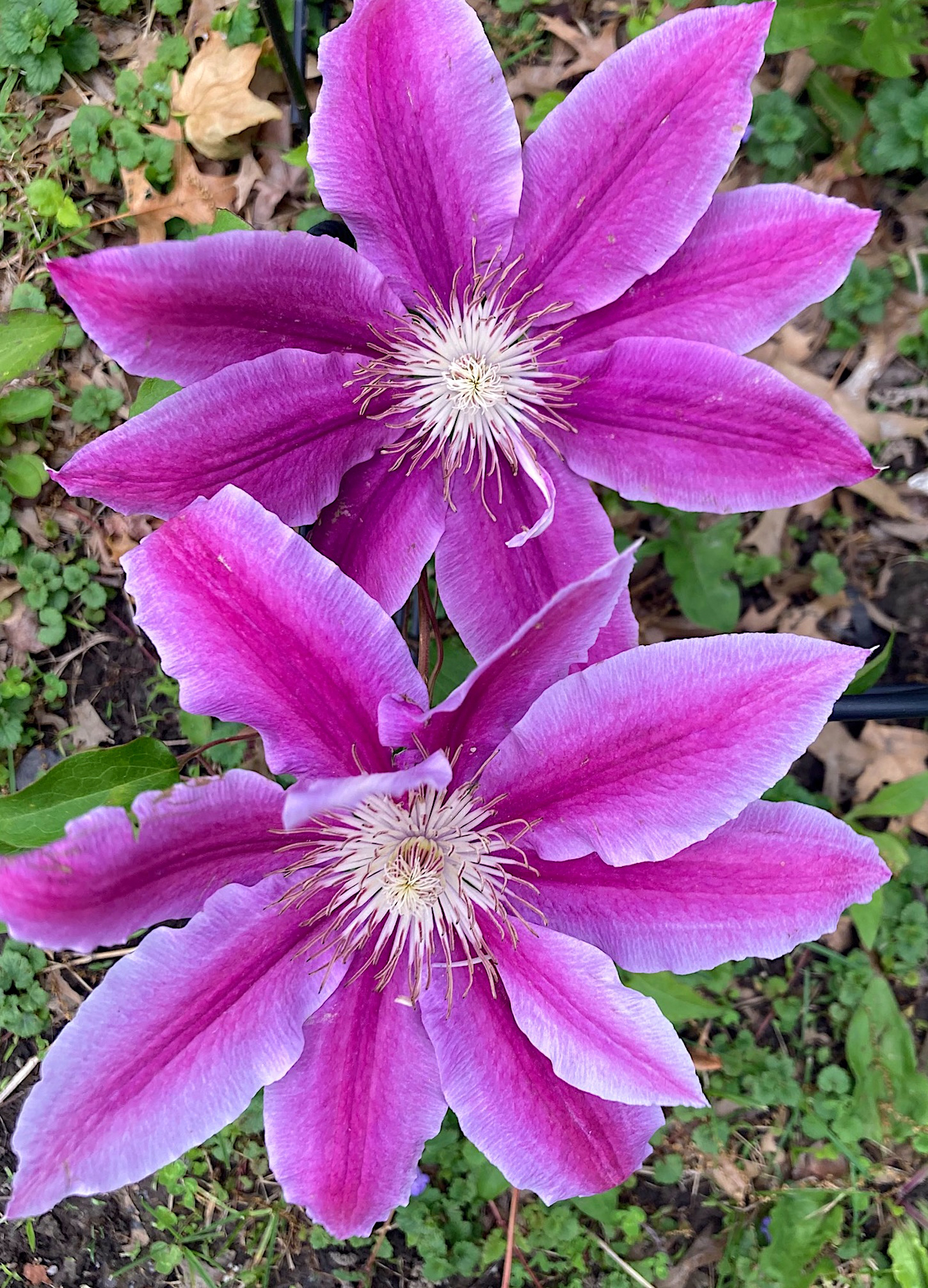
 Clematis, a member of the buttercup family, comes in many colors and blooms at different times. Photo by Linda Geist.
COLUMBIA, Mo. – Ornamental vining plants often are overlooked as a way to screen unpleasant views while adding beauty to a landscape, said University of Missouri Extension horticulturist David Trinklein.
“Especially in densely populated areas, they can provide privacy in outdoor settings where space is limited,” he said. “Additionally, a fence, arbor, pergola or other structure can be made to blend into the landscape more attractively using ornamental vines.”
Vining plants climb in three main ways, and the best type of support often depends on how they climb. One way vines climb is by twining. Twining plants wrap their stems around any available support as they ascend. Among the best-known climbers are trumpet honeysuckle, silver lace vine, bittersweet and wisteria. Annual vining plants such as morning glory and moonflower also climb this way.
Another group climbs by grasping a support with tendrils or closely related structures. Botanically, tendrils are modified stems, leaves, leaflets, leaf tips or leaf stipules plants use to encircle and hold onto objects they touch. The main stems of these plants do not twist as they climb a support. Sweet pea, porcelain berry and passion vine all climb by means of tendrils. Clematis also fits into this group. but it does not produce tendrils. Instead, it wraps its petioles (leaf stalks) around supporting structures.
The third group of vining plants climbs by clinging to structures with special aerial rootlets. Ornamental vines in this category include English ivy, Boston ivy, Virginia creeper, trumpet vine (which also may twine) and climbing hydrangea. Some members of this group of vines, such as English ivy, have aerial rootlets that end in adhesive “sucker discs.” Structures made of wood, stone or brick are appropriate support for them, any many vines in this category can cling to the trunks of trees.
There are a few “climbing” plants that do not climb on their own. An excellent example of this group is climbing rose. It produces long, flexible canes without any natural mechanism to adhere to a structure. Plants in this group need human assistance to climb and must be fastened to trellises, arbors or fences.
For quick cover on a privacy fence, consider fast-growing woody vines or herbaceous annuals. American bittersweet and wisteria are examples of woody vines that climb quickly. They are not good choices for small spaces as they easily crowd out nearby plants.
American bittersweet (Celastrus scandens) is a native vine that provides quick cover and produces attractive red fruit. Plants of bittersweet are either male or female, so if you want berries, you’ll need several plants to ensure that both male and female plants are present for pollination.
Bittersweet is virtually pest-free. Its berries are attractive to birds, which tend to spread the plant to other areas. American bittersweet is aggressive, but the Missouri Department of Conservation does not consider it an invasive species. In contrast, Oriental bittersweet (Celastrus orbiculatus) is highly invasive.
Wisteria is a fast-growing vine that produces attractive flowers but often requires three to seven years for new plants to begin flowering. There are several species of wisteria. Japanese wisteria (Wisteria floribunda) and Chinese wisteria (Wisteria sinensis) are the two most widely grown. Of the two, Japanese wisteria is considered the more ornate, producing long racemes of fragrant flowers in spring. There are cultivars with white, pink, violet or blue flowers. The award-winning ‘Royal Purple’ has deep purple, fragrant flowers. Hardy only to Zone 5, this plant is considered invasive by certain southeastern states. Note that all parts of the plant, especially seeds, contain a saponin glycoside called wisterin, which is toxic if ingested.
Morning glory (Ipomoea spp.) is an annual vine that can cover a fence relatively quickly. In addition to the privacy provided by its dense foliage, morning glory blooms profusely, adding color (and often fragrance) to the landscape. Popular morning glory varieties include the sky-blue ‘Heavenly Blue,’ the crimson ‘Scarlett O’Hara,’ the dark purple ‘Grandpa Ott,’ the striped ‘Flying Saucers’ and the pure white ‘Pearly Gates.’
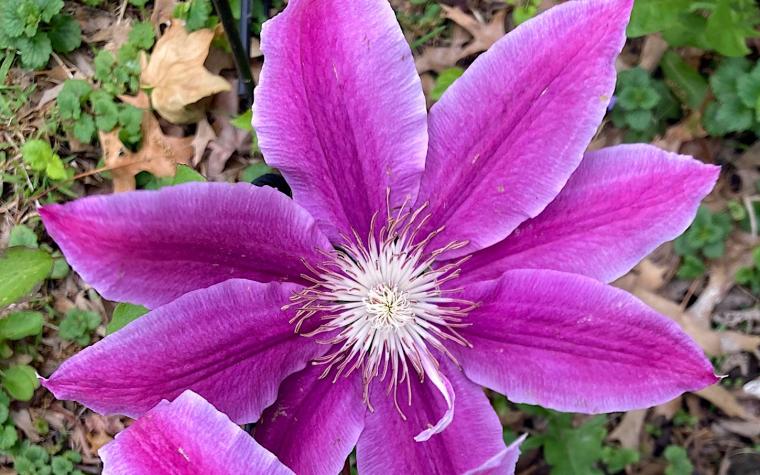
Finally, clematis (Clematis spp.), often called Queen of the Vines, is beloved for its colorful, star-like flowers that bring vibrant vertical interest to fences and trellises. Its unmatched versatility, long bloom season and resistance to deer make it a stunning centerpiece for any garden or landscape. Extensive hybridization of this genus has led to some outstanding cultivars, Trinklein said. Its apetalous flowers come in white, pink, red, lavender, blue and bicolors.
Photo
Clematis, a member of the buttercup family, comes in many colors and blooms at different times. Photo by Linda Geist.