Prevention is your best tick-et to safety.
-
Image
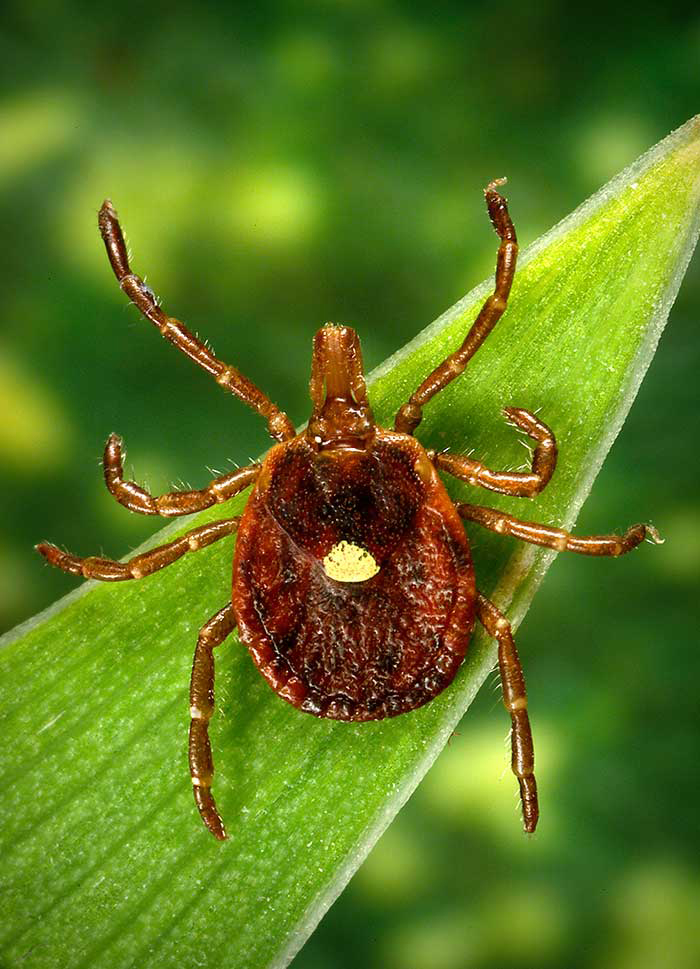
 The lone star tick, one of the most common tick species in Missouri, can spread Heartland disease, first found in Missouri in 2009. Female lone star ticks can be identified by the white dot in the center of the back. Photo courtesy U.S. Centers for Disease Control and Prevention.
COLUMBIA, Mo. – June through September is considered peak season, but any warm and humid day is tick time.
There is no off-season for ticks, says University of Missouri Extension horticulturist Tamra Reall. “They can emerge from the shadows at any time they sense warmth.”
In Missouri, activity typically picks up in spring and increases through April. Numbers peak around June and July. Dogs and wildlife such as deer are frequent carriers.
Emily Althoff, extension entomologist for MU and Lincoln University, notes that Missouri is a hotbed for ticks, especially the lone star tick, which causes alpha-gal syndrome, a unique meat allergy that can cause severe reactions like anaphylaxis (hives, swelling, trouble breathing). She promotes year-round use of tick repellents containing DEET.
Althoff recommends seeing a doctor if you develop fever, rash, headache, fatigue, muscle or joint pain, or swollen lymph nodes within two weeks of a tick bite. These can signal infections like ehrlichiosis or STARI (Southern tick-associated rash illness) or even alpha-gal syndrome.
Missouri is home to three primary tick species that bite humans: the lone star tick, the American dog tick and the deer tick (or blacklegged tick). All three are common throughout the state.
The lone star tick is one of the most aggressive tick species in Missouri and is widespread throughout the state. Adult females can be identified by the white dot or “star” on the back. Adults and nymphs are active from early spring through midsummer, while larvae remain active from late summer through early fall, meaning some life stage is present for much of the year.
“You can find the lone star tick in a lot of different places,” she says. “It can be in tall grasses, weeds and bushy areas. It is not just in woods.”
Ticks are difficult to avoid and even more difficult to kill.
Ticks are surprisingly resilient in water. They don’t swim, but some species can survive submersion for extended periods using a specialized respiratory system. Rather than trying to drown ticks, put them in alcohol, seal them in tape, or place them in a sealed container before disposing of them in the trash. Do not crush their heavy outer shell, as this can expose you to the tick’s infectious fluids. Avoid home remedies such as petroleum jelly, nail polish or heat to remove them, as these may also release infectious fluids onto your skin.
A useful tip: If found on found on family members, tape the tick to an index card and make a note of the date and location it was found. Keep the card for about six months. If unusual symptoms develop, you’ll have the tick available for pathogen testing. (And it makes quite the show-and-tell item.) Keep the card in a sealed container in the freezer.
With hiking and camping season approaching, Althoff advises Missourians to:
- Always wear light-colored protective clothing so you can easily spot ticks. Tuck shirts into pants and pants into socks.
- Spray yourself and others in your hiking party with an Environmental Protection Agency-approved tick repellent for an extra layer of protection. After an outing, inspect yourself and others for ticks, paying close attention to areas behind your ears, behind your knees, and along your hairline and waistline. Check pets as well.
- Stay in the center of hiking trails.
- Disrobe on a back porch or in the laundry room, do a tick check, throw clothing in the dryer immediately, and shower as soon as possible. Keep in mind that once a tick has attached, it cannot be showered off.
Learn more
Related MU Extension publications available for free download:
- Ticks. Brief overview of common tick species in Missouri, tick-borne diseases and prevention and treatment of tick bites.
- Ticks and Tick-Borne Diseases. A more detailed guide from MU’s Integrated Pest Management program.
Related videos:
- Emily Althoff talks about ticks (YouTube short).
- MU researchers study ticks and alpha-gal syndrome(YouTube video).
MU Extension information and resources on alpha-gal syndrome.
Photo
Lone star tick. The lone star tick, one of the most common tick species in Missouri, can spread Heartland disease, first found in Missouri in 2009. Female lone star ticks can be identified by the white dot in the center of the back. Photo courtesy U.S. Centers for Disease Control and Prevention.