-
Image
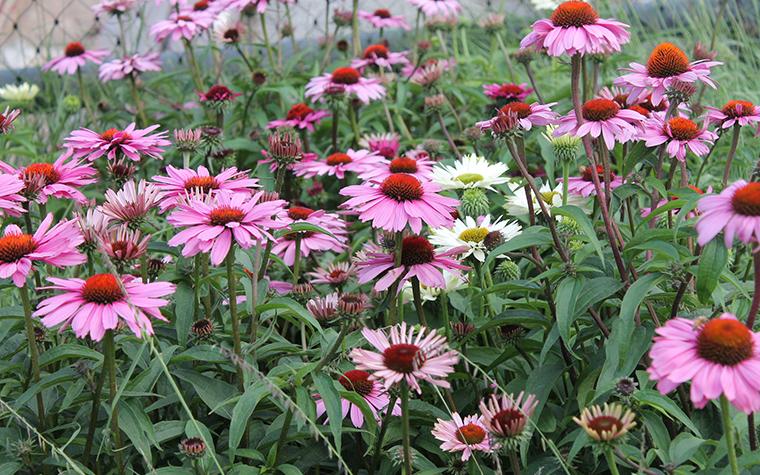 Purple coneflower. Photo by Elvert Barnes. Shared under a Creative Commons license (BY-SA 2.0).
COLUMBIA, Mo. – For many, the term “wildflower garden” conjures images of a delicate spring native to lightly shaded woodland sites or moist meadows. But there are may summer-blooming wildflowers native to dry, sunny hillsides, glades and other places with more austere growing conditions.
Many of them are much easier to grow than spring wildflowers and are ideal for adding color to a low-maintenance, summer flower garden, said University of Missouri Extension horticulturist David Trinklein.
“First, it must be emphasized that wildflowers should not be dug from the wild,” Trinklein said. In Missouri, it is illegal to dig or remove any plants or plant parts from rights of way without permission. However, Missouri statutes do allow “the collection of seeds, fruits, nuts, berries, edible wild greens or flowering parts of plants” for personal use.
One of the most colorful summer wildflowers is butterfly weed (Asclepias tuberosa), which is often found growing in poor soil along roadsides. In summer, it produces clusters of small, bright orange flowers that are strikingly attractive, especially to butterflies.
A member of the milkweed family, butterfly weed produces pointed seed pods containing fluffy seeds distributed by the wind. Easily grown from seeds, it forms dense, colorful clumps. The flowers are useful for cutting and displaying in arrangements. In a garden, members of the genus Asclepias serve as the sole source of food for monarch butterfly larvae. Therefore, growing this species is a good way to help in the monarch butterfly preservation effort.
Another useful Missouri wildflower is black-eyed Susan (Rudbeckia hirta). Drought- and heat-tolerant, it produces abundant amounts of daisy-like flowers with golden petals and dark centers. It also is attractive to pollinators and provides long-lived cut flowers to use indoors.
Purple coneflower (Echinacea purpurea) produces daisy-like flowers with purplish-pink petals and dark, reddish-brown centers. Commonly found along roadsides and in prairies, it is easy to start from seeds. The latter can be direct-seeded any time in late summer. Alternatively, you can plant seeds in cold frames in late winter or early spring, then transplant young plants to the garden when they are large enough to handle. Purple coneflower also is very pollinator-friendly.
For the gardener who wants extended bloom time from a single native plant, rose verbena (Glandularia canadensis) is a good candidate. This low, sprawling plant bears clusters of small lavender or magenta flowers. It makes an excellent rock garden plant. In sunny locations, it may flower from spring until a late fall freeze.
In locations with light shade and fairly moist soil, several other summer-blooming wildflowers may be used. One of the best is campanula, or tall bellflower (Campanula americana). It, too, flowers through most of the summer, producing blue flowers on a tall spike. Under ideal conditions, stalks of tall bellflower may grow up to 6 feet.
Blue lobelia (Lobelia siphilitica) is related to tall bellflower and grows in similar locations. Also known as blue cardinal flower, it blooms in late summer, producing flowers that range from light to dark blue. Blue lobelia normally grows no more than 3 feet in height.
For vivid red flowers, cardinal flower or cardinal lobelia (Lobelia cardinalis) is spectacular. This extremely hardy plant is famous for attracting hummingbirds and swallowtail butterflies. Like blue lobelia, it likes low, moist areas and light shade.
There are many other prairie and woodland summer-flowering native perennials that may be used in the garden. Two examples are aromatic aster (Symphyotrichum oblongifolium) and goldenrod (Solidago spp.). Additional wildflowers for garden use include blazing star (Liatris spicata), evening primrose (Oenothera biennis), beardtongue (Penstemon spp.) and perennial sweet pea (Lathyrus latifolius).
For more information, see MU Extension publication G6660, Wildflowers in the Home Landscape.
Photos
Black-eyed Susan. Photo by F.D. Richards. Shared under a Creative Commons license (BY-SA 2.0).
Purple coneflower. Photo by Elvert Barnes. Shared under a Creative Commons license (BY-SA 2.0).