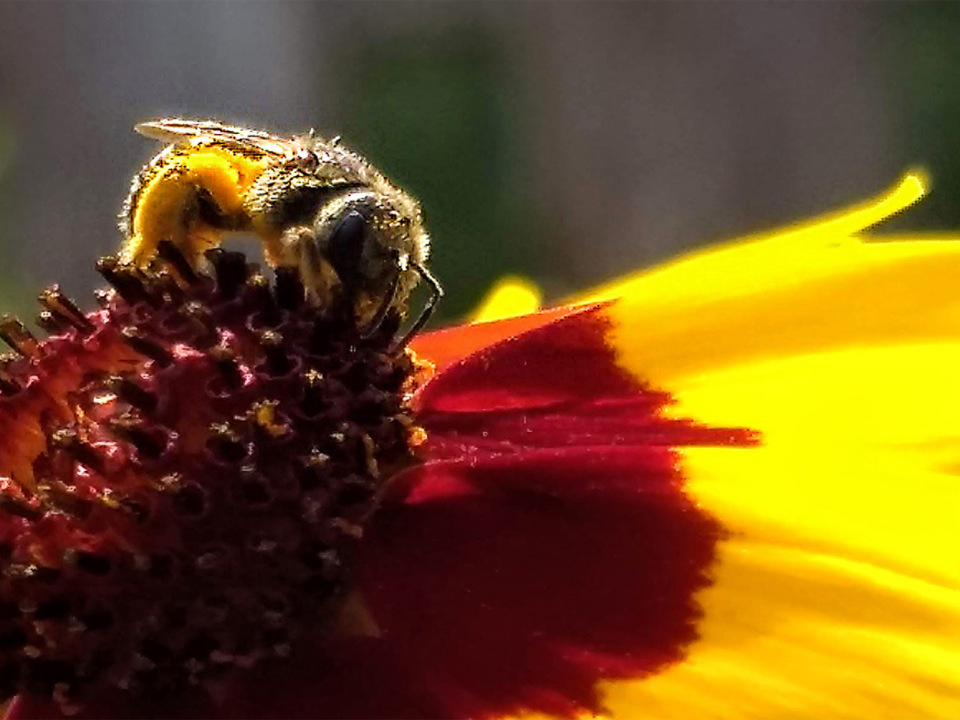
Annuals create a haven for birds, bees and beneficials.
-
Image
 Zinnia is a low-maintenance annual that attracts pollinators such as bees, butterflies and hummingbirds. Photo by Linda Geist.
 -
Image
 Photo by Tamra Reall.
 -
Image
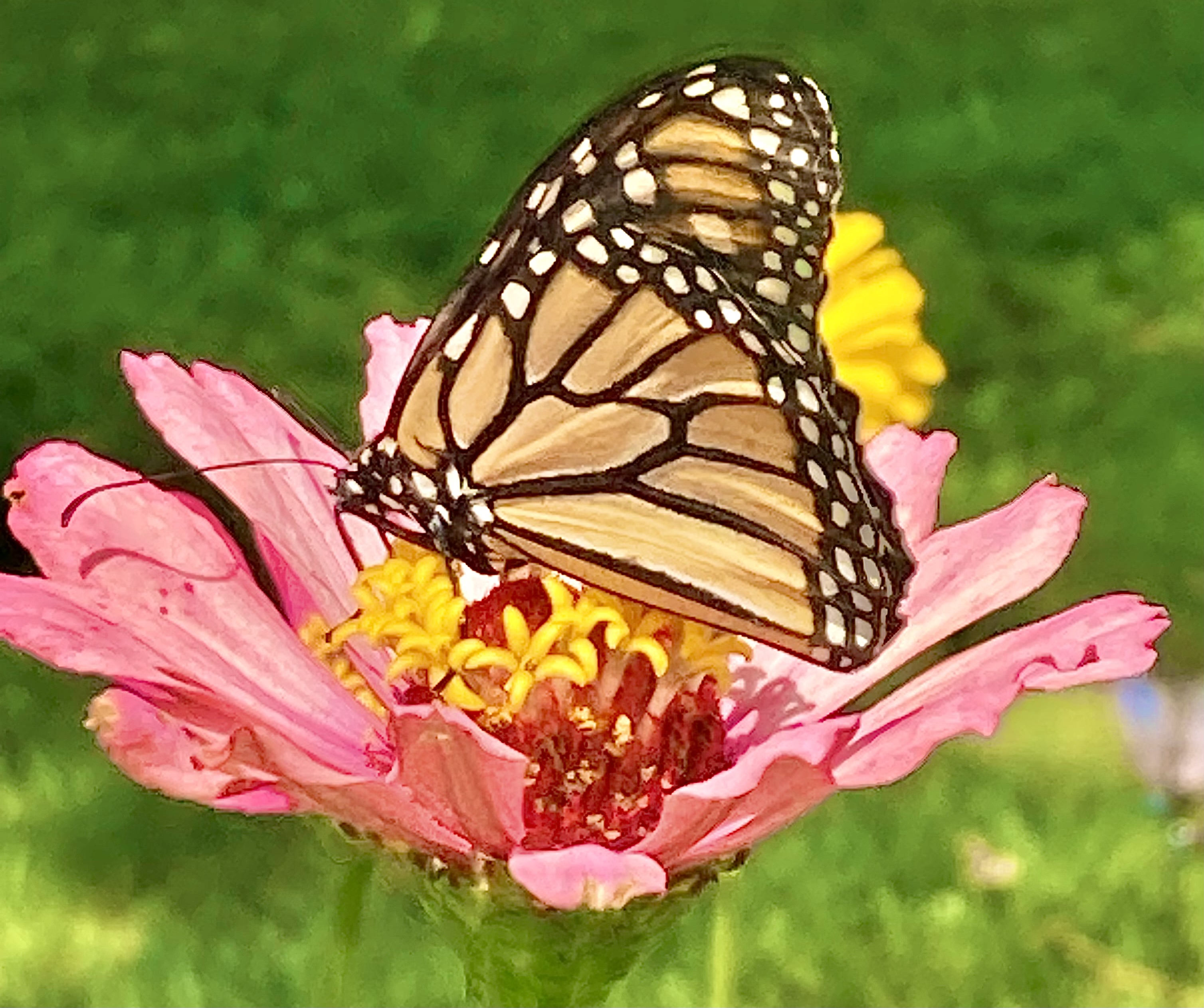
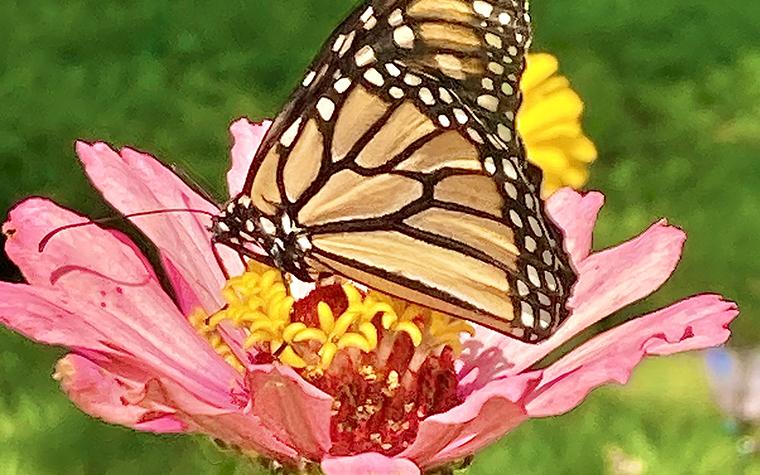 Photo by Linda Geist.
CARROLLTON, Mo. – This spring, fill your garden with annuals that look great, work hard and roll out the welcome mat for pollinators, says University of Missouri Extension horticulturist Kathi Mecham.
“Attracting pollinators is both essential and enjoyable,” says Mecham. “Bees, butterflies, hummingbirds and other beneficial insects play a vital role in pollinating food crops and keeping ecosystems healthy.”
Many pollinator-friendly annuals are easy to grow in gardens or containers, readily available at garden centers and bloom nonstop until frost. While these plants are considered low maintenance, they aren’t completely maintenance-free, says Mecham.
Most need minimal deadheading and watering once established, but Mecham notes that plants in containers dry out faster than those in the ground. Even drought-tolerant plants may need extra water when growing in pots.
Don’t worry if space is limited. Small gardens, raised beds and containers can still make a big impact. “With a little planning, you can create a garden that provides food, shelter and water for pollinators—and supports healthier landscapes and food systems,” she says.
General growing tips
- Most pollinator-friendly annuals prefer full sun (6–8 hours per day).
- Skip insecticides and systemic pesticides that harm pollinators.
- Plant flowers in groups or drifts so pollinators can find them more easily.
- Add a shallow water source, like a dish filled with stones.
Featured low-maintenance, full-sun annuals
Zinnia
A longtime favorite for gardens and containers.
- Colors: Red, yellow, orange, pink, rose, lavender, green and white.
- Maintenance: Very low; heat-loving and drought tolerant once established.
- Planting: Easy from seed; succession planting keeps blooms coming. Seeds can be planted as late as July 4.
- Pollinators: Bees, butterflies and hummingbirds; birds enjoy the seed heads later in the season.
Cosmos
Light, airy plants that add height and movement.
- Colors: Pink, red, white, orange and yellow.
- Maintenance: Low.
- Planting: Grows quickly from seed and may self-seed.
- Pollinators: Bees, butterflies and beneficial insects.
Lantana
A tough, heat-loving standout with long-lasting color.
- Colors: White, yellow, orange, red and purple, often mixed in one cluster.
- Maintenance: Very low; drought-tolerant once established.
- Planting: Great for containers or garden beds.
- Pollinators: Butterflies and hummingbirds.
Other easy annuals
- Sunflower: Excellent for bees and birds. Dwarf varieties work well in containers, with colors ranging from deep red to lemon yellow.
- Tithonia (Mexican sunflower): A monarch favorite. Fast-growing, heat-tolerant and bold. Give it room, as plants can reach 4–10 feet tall.
- Salvia: Tall spikes of purple, blue, violet, lavender or white flowers bloom reliably all season. Drought-tolerant and perfect as container focal points.
- Alyssum: Low-growing and sweet-smelling, great for mixing in containers. Purple and lavender blooms attract beneficial insects.
- Supertunia: No deadheading required; available in many eye-catching colors. Excellent as a spiller plant in containers.
- Cuphea: Full-sun, drought-tolerant and covered in cigar-shaped blooms that hummingbirds love.
- Gaura: Delicate pink flowers thrive in containers and attract butterflies.
- Gomphrena: Compact plants with globe-shaped flowers in bold colors; they handle heat and drought while attracting bees and butterflies.
“Creating a pollinator-friendly garden doesn’t have to be complicated,” says Mecham. “Just plant smart, skip the chemicals and let nature do the rest.”
Photos
Butterfly on zinnia. Zinnia is a low-maintenance annual that attracts pollinators such as bees, butterflies and hummingbirds. Photo by Linda Geist.
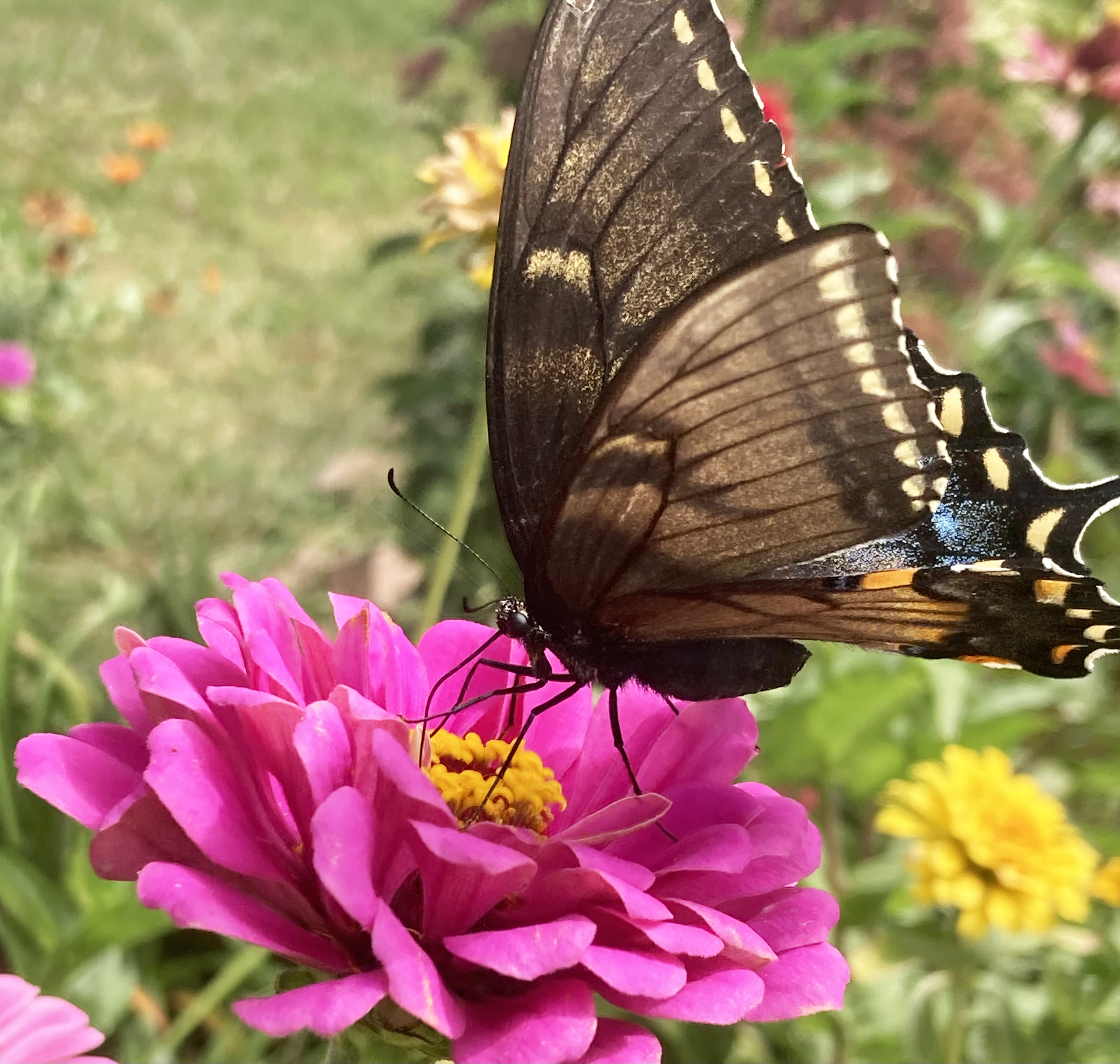
Butterfly on zinnia 2. Photo by Linda Geist.
Bee pollinating. Many pollinator-friendly annuals are easy to grow in gardens or containers. Photo by Tamra Reall.