-
Image
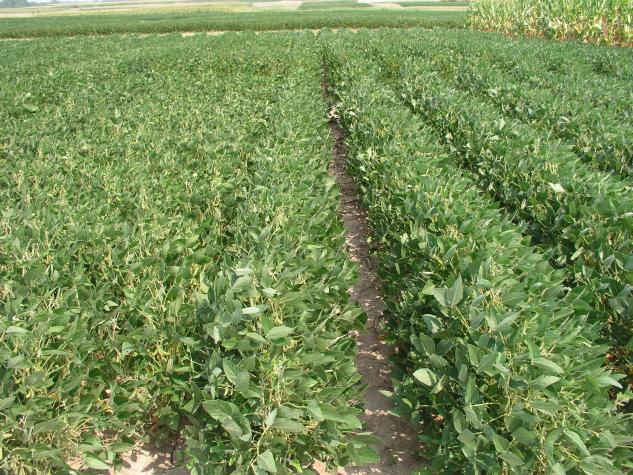 Soybean field. File photo.
COLUMBIA, Mo. – Early planting remains strongly associated with soybean yield, according to research by University of Missouri state soybean farming system specialist Andre Reis.
“While late-season weather often influences final soybean yields, the potential yield is primarily set during planting, considering the ideal combination of planting date, variety (and its maturity group) and plant population,” he said. “Any stress the soybean crop encounters throughout the remaining growing season will either diminish or maintain the yield potential established during planting.”
With USDA predicting that farmers will plant 5% more soybean acres in 2026 due to projected higher prices, early planting might give growers an advantage. USDA also predicts an average of 53 bushels per acre in 2026.
In 2025, Missouri soybean farmers produced record yields, except on acres planted after May 17. Reis, who directs the MU Variety Testing Program, notes that nearly three decades of data confirms a consistent link between early planting and higher yields. These findings are consistent with results from private industry trials.
Each year, the Variety Testing Program evaluates more than 600 varieties of soybean, corn, wheat and grain sorghum at testing sites across the state. Reis and his team collected data from more than 5,200 plots in addition to analyzing more than 25,000 trials conducted by private seed brands.
Although many factors affect yield potential, Reis reiterates that planting date is the top predictor of yield. “The earlier, the better. Planting date is the main driver,” he says. It also gives the farmer flexibility and extends the planting window. “As important as increasing yield potential through early planting, finishing the planting season early prevents the steep yield declines associated with late planting dates.”
Soybean is more forgiving of cool temperatures than corn, so planting soybean first allows the farmer to wait to plant corn when it’s warmer.
Still, it is recommended to wait for soil temperatures of 50 F or higher before planting soybean to reduce early-season risk, Reis says. Soybean seeds absorb about half their weight in water in the first 24 hours after planting, so planting conditions and moisture still play a major role in emergence and stand establishment.
Row spacing is the second-strongest predictor of yield, said Reis. His research shows that optimal row spacing can increase yields by 6-10 bushels per acre. When combined with early planting, higher populations (190,000 seeds per acre) also yield the best results in average yielding environments.
However, Reis cautions that the economic benefits of very high plant populations can plateau, and in some cases, the additional cost may outweigh the advantages. Overall, 15-inch row spacing produced better yields than 30-inch rows in most regions, except for southeastern Missouri, where row spacing had no effect.
Choose the right variety when planting early, said Reis. Industry data indicates that the variety matters more than the seed treatment. Early planting dates with early maturity groups and higher populations yielded the best result in variety trials. Under some conditions, late planting paired with later maturity groups and reduced seeding rates can yield favorable results.
Early planting comes with risks. Certain yield-limiting factors such as frost damage and flood remain outside growers’ control.
“The planting date is when the farmer can plant,” Reis said, acknowledging the practical constraints producers face such as record-breaking winds and rains in Missouri in 2025.
Late-planted soybeans also face the risk of drought stress during critical growth stages.
From 2025 variety tests found several notable trends:
North-central and southeastern Missouri. Early planting, early maturity cultivars and high seeding populations produced the strongest results. For example, a Maturity Group 2.8 variety performed well when paired with early planting and a high population in northern Missouri.
Southwestern Missouri. Intermediate planting dates outperformed early dates. Later maturity groups delivered the highest yields in this region. Also noted, southwestern Missouri experienced more severe drought than the rest of the state.
Reducing seed population. Reis’ data shows that reducing seed population to curtail expenses results in less yield potential. When planting late, increase your seeding rates, Reis said.
Reis says MU Extension offers numerous online resources to help famers make decisions. MU Extension agronomists also are available to help.
MU Extension’s Soybean Growth Monitoring Tool, developed by Reis, simulates soybean development and yield across different regions of Missouri, using historical and current weather data. The tool helps farmers understand how weather influences crop development and yield. These twice-monthly forecasts support in-season decision-making by providing timely insights into crop performance.