A ‘flower for all seasons.’
-
Image
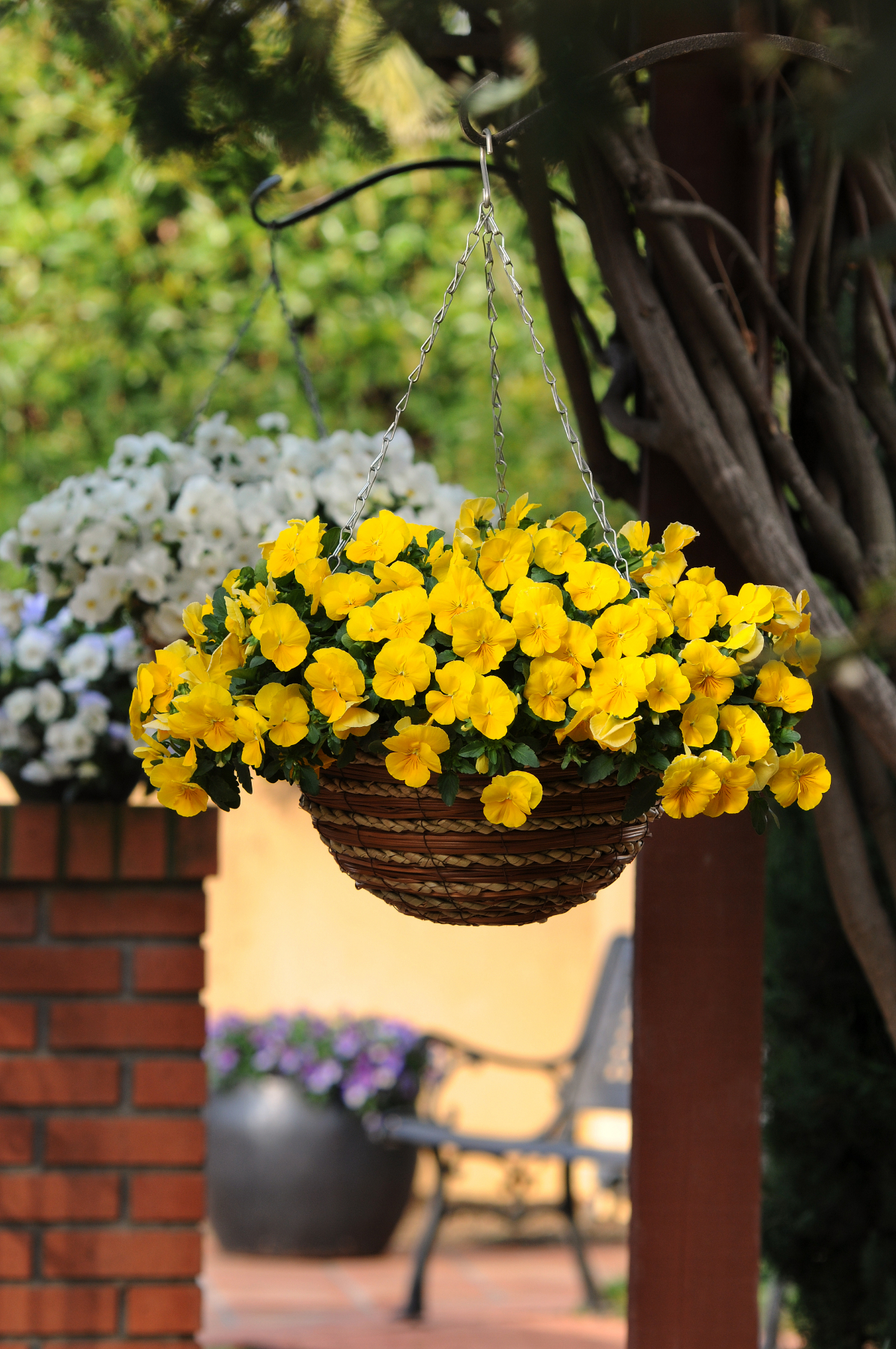
 Cool Wave yellow trailing pansy. Photo courtesy Ball Horticultural Co.
COLUMBIA, Mo.— As you read this article, somewhere in North America pansies are blooming prolifically in a garden, said University of Missouri Extension horticulturist David Trinklein.
That’s true no matter when you are reading this: This delightful garden plant is truly a “flower for all seasons,” flourishing in the winter in the far south and in the summer in the north, Trinklein said. Spring and fall are when Midwesterners can enjoy their unique color and delicate fragrance.
In Missouri, September is an ideal month to plant them for color that will extend for many weeks.
Pansy is often confused with its close relative, viola. Both species have flowers consisting of five petals, a typical trait of most dicots. However, pansy has four petals pointing upward and one pointing down, whereas viola has three pointing upward and two pointing down. Additionally, violas usually bear somewhat smaller flowers.
Pansy’s history is closely linked with the viola. Violas are thought to be endemic to the cooler parts of Europe. The Greeks cultivated them as early as the fourth century B.C., primarily for medicinal purposes.
Later, a watchful gardener noticed a particular viola that flourished in alpine meadows blessed with abundant sunshine. This strain was given the common name of wild pansy. “One might speculate the observant gardener was from France, since the word pansy can be traced back to the French word pense, which means ‘thought’ or ‘remembrance,’” Trinklein said.
European gardeners prized violas and wild pansies and grew them in abundance. In in the 1800s, English nobleman Lord Gambier and his gardener, William Thompson, began crossing various species of the genus Viola. These crosses resulted in flowers of unusual colors and color combinations as well as increased flower size. History credits Thompson with making the cross that resulted in the new (and now familiar) species Viola x Wittrockiana. This cross produced flowers with huge blocks of color (or faces) on the lower petals. The flowers of many previous crosses possessed only lines of contrasting color.
Over the past few decades, efforts in the U.S., Germany and Japan have produced pansies with new colors, including new shades of pink, rose or orange, as well as flowers with unusual bicolor designs. Given the current popularity enjoyed by pansy, the improvement is far from over.
In the garden, pansies enjoy mild temperatures and abundant sunshine. Unfortunately for Midwestern pansy lovers, this combination of environmental conditions is available only in the spring and fall. To extend the useful life of pansy in the spring, or to get an earlier start on fall color, provide an exposure of morning sun followed by afternoon shade.
Although pansy should be considered an annual in Missouri, fall-planted pansies frequently survive the winters and produce color in the late winter or very early spring after temperatures begin to moderate.
Because of their fine and delicate root systems, pansies require porous soil that is highly enriched with organic matter. The latter promotes good soil aeration along with adequate water retention. Additional pre-plant fertilizer may be required, depending upon the inherent fertility of the soil.
When planting, space pansies about 6-10 inches apart and water well. Never allow pansies to dry. In most settings, they need between 1-2 inches of water weekly. You can supply additional fertilizer in water-soluble form, if necessary.
Pansies are relatively disease- and pest-free. Yellow leaves often indicate the presence of root rot, which is most often caused by overwatering. A white, powdery substance on the leaves (and stems) indicates powdery mildew. Choose a location with good air circulation to prevent powdery mildew.
“Many avid gardeners become a bit depressed in the fall as they contemplate the end of the growing season,” said Trinklein. “Pansies help to extend that growing season because of their ability to withstand sub-freezing temperatures. Therefore it might be concluded that pansies are as therapeutic for our inner being as they are beautiful to our eyes.”
Photo
Cool Wave yellow trailing pansy. Photo courtesy Ball Horticultural Co.