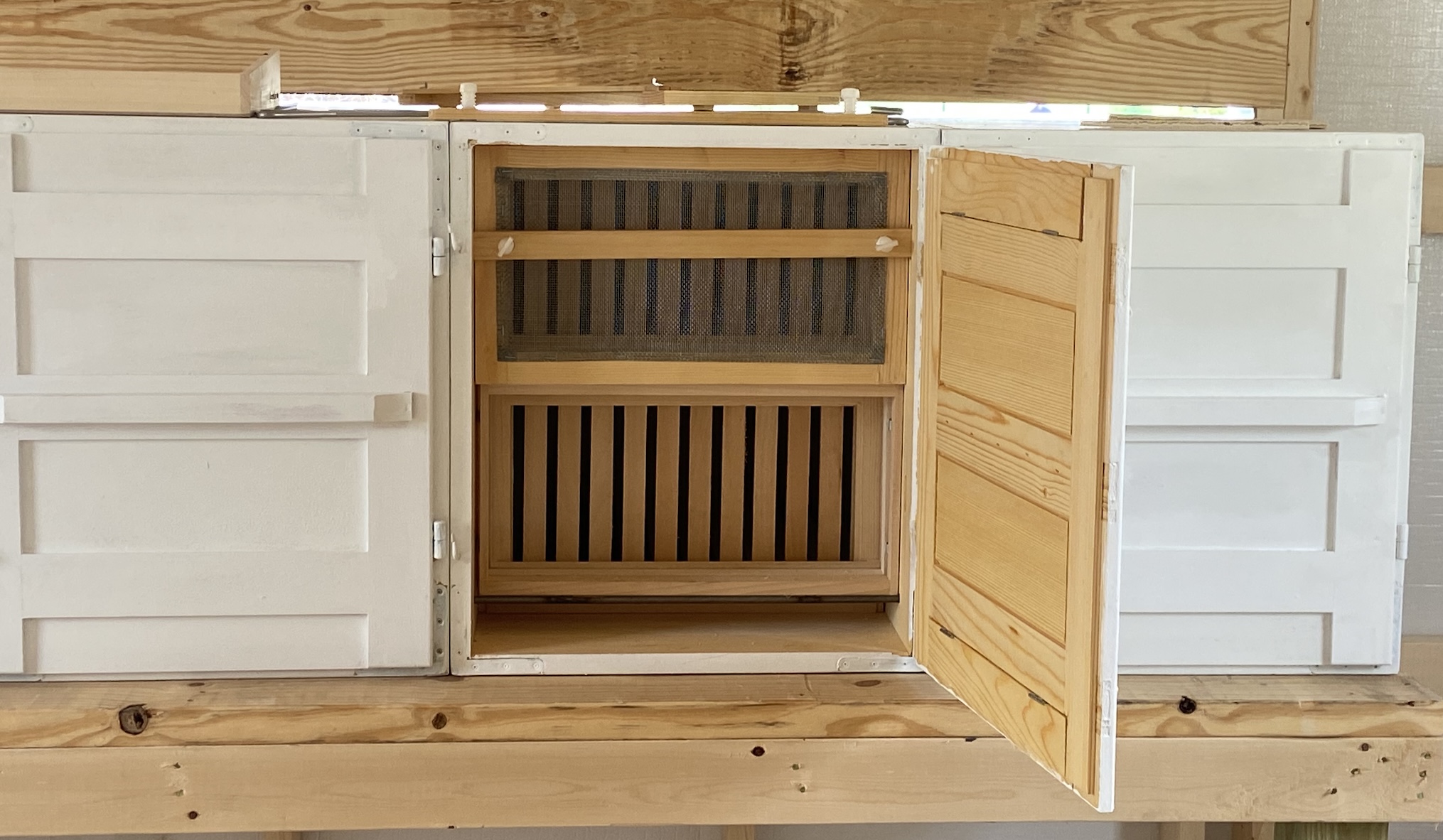
Slovenian-style beekeeping hives support veterans with disabilities while promoting wellness, community and agricultural education.
-
Image
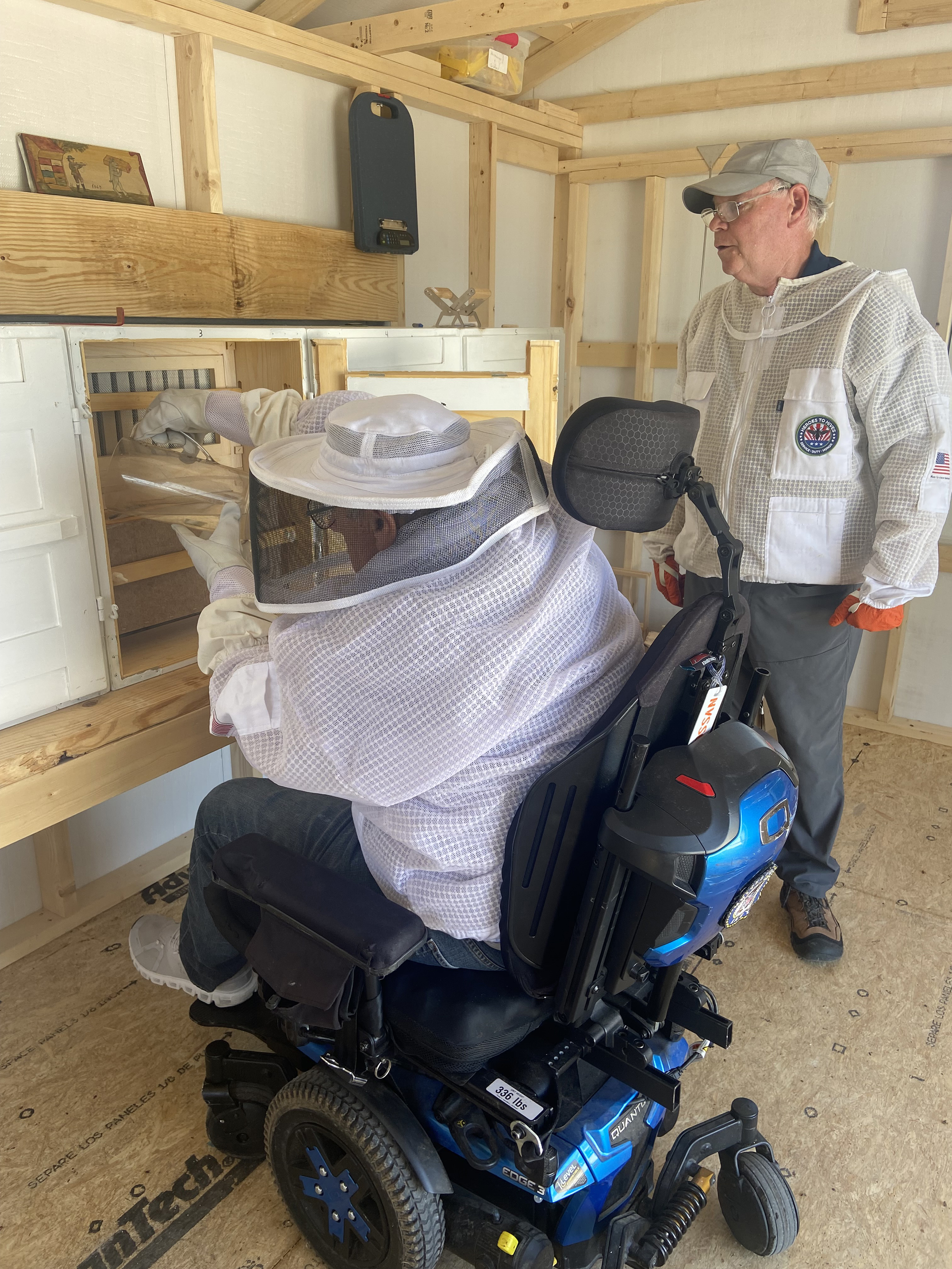
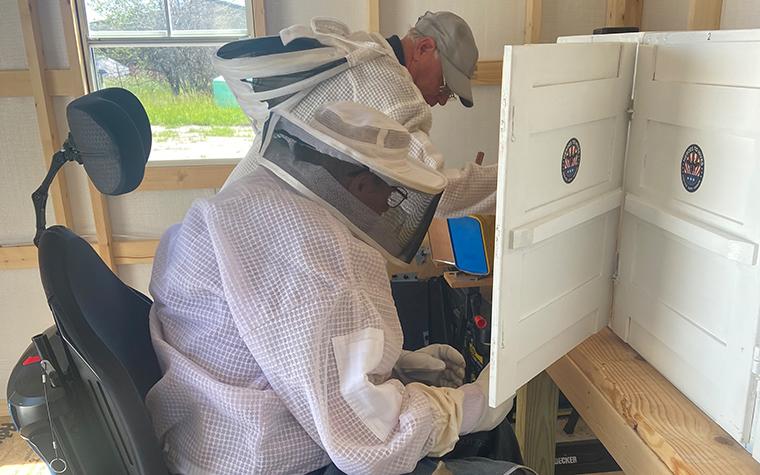 Vietnam War era veteran Fred Marjoda of Columbia finds it easier to participate in beekeeping due to the design of the beehouse and hives. Photo courtesy of Karen Funkenbusch.
-
Image
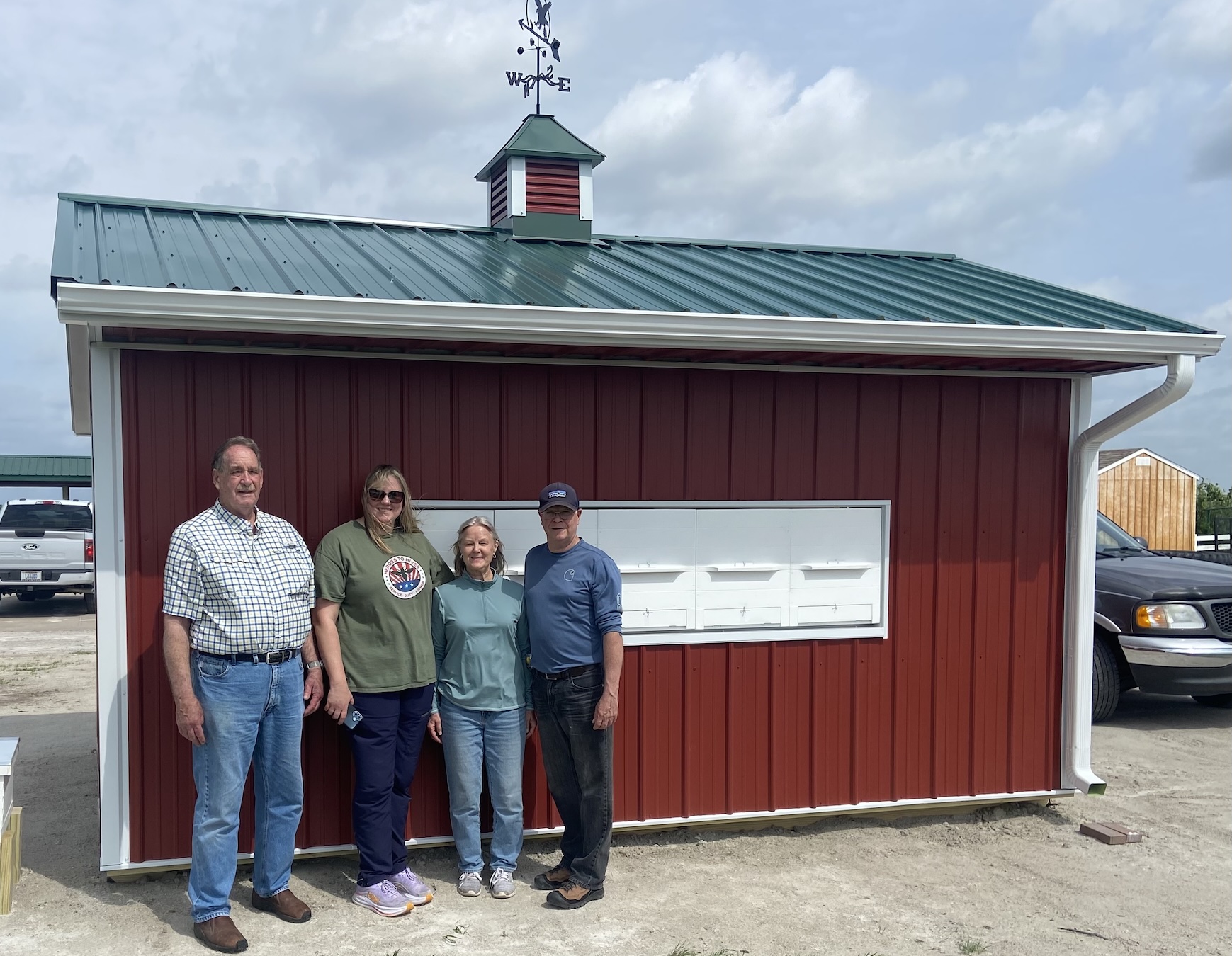
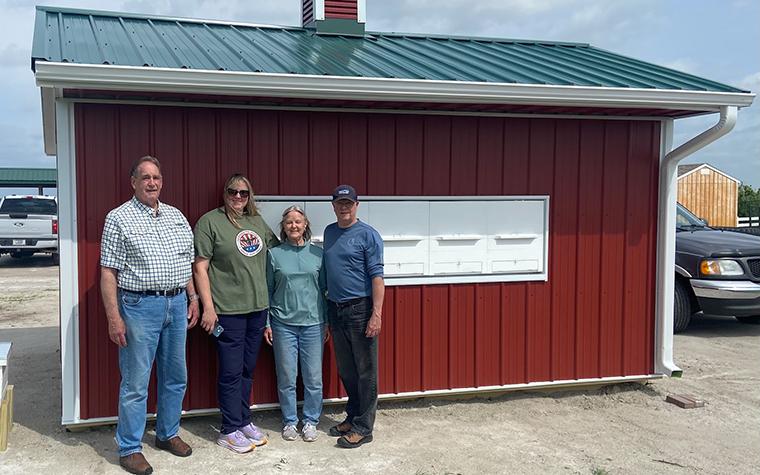 Volunteers from the Rotary Club of Columbia, Boone Regional Beekeepers Association and Extension Master Gardeners helped prepare the Jefferson Farm grounds for the Heroes to Hives beehouse. Pictured, from left, Carl Korschgen, who serves as a mentor to the Missouri Heroes to Hives program; MU Extension field specialist Joni Harper; MU Extension assistant professor Karen Funkenbusch; and Heroes to Hives yard boss at Jefferson Farm, Kirk Funkenbusch. Photo courtesy of Karen Funkenbusch.
-
Image
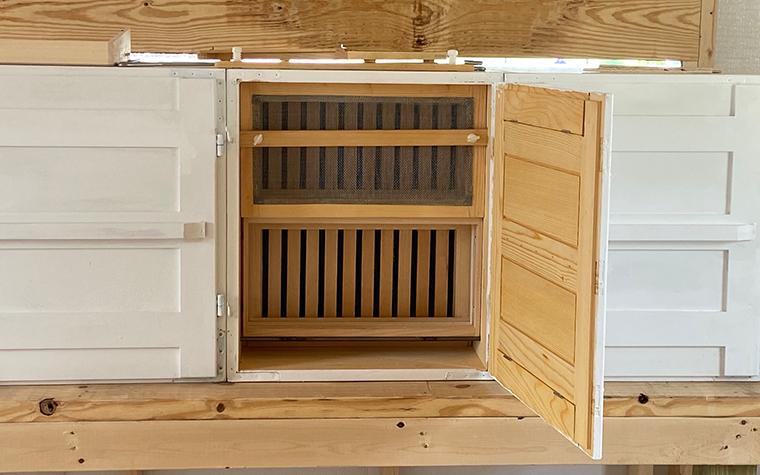 The beehouse provides protection from the elements and is accessible in a sitting position. The Slovenian-style beehives combine accessibility, wellness and hands-on agricultural education. Photo courtesy of Karen Funkenbusch.
COLUMBIA, Mo. – Accessible, ergonomically designed beehives at the University of Missouri’s Jefferson Farm and Garden Extension and Education Center give disabled veterans an opportunity to practice beekeeping.
The new hives grew out of MU Extension’s Heroes to Hives program, which addresses the financial and personal wellness of veterans through free professional training and community development centered around beekeeping.
The AŽ hives, named after their Slovenian inventor, Anton Žnideršic, eliminate the heavy lifting, bending and back strain of traditional Langstroth hives, says Karen Funkenbusch, who heads Missouri’s Heroes to Hives program. Individual frames can slide out horizontally, and they can be accessed from a sitting position.
The design helps beekeepers like Fred Marjoda, who uses a wheelchair. A Navy veteran of the Vietnam War, Marjoda has degenerative bone disease and a spinal cord injury from a 1977 car accident.
“The Slovenian-style beehouse and AŽ hives provide significant, accessible therapeutic beekeeping opportunities for veterans by eliminating heavy lifting and reducing physical strain, allowing those with injuries to work comfortably,” Funkenbusch says.
“These setups offer a calm, focused environment that reduces PTSD, anxiety, and stress symptoms while fostering a sense of purpose and community,” she adds. Additionally, the meditative nature of working with bees provides a focused state that helps manage hypervigilance and anxiety.
“Caring for the bees provides a sense of accomplishment, and an alternative focus to manage PTSD-related challenges.”
Marjoda and other veterans say the Heroes to Hives program gives them a sense of community, camaraderie and teamwork, like a military unit. The shared experience also offers veterans an opportunity to connect with one another, helping them feel less socially isolated.
The Columbia hives are part of MU Extension’s growing efforts to train military veterans about the art of beekeeping. MU Extension’s Heroes to Hives collaborates with other organizations to provide accessible equipment and specialized training apiaries in locations across the state including Warrensburg, Poplar Bluff, St. Louis and Mount Vernon.
Marjoda moved to Columbia to live with his brother, sister-in-law and nephew and to be closer to specialized care at the Harry S. Truman Memorial Veterans’ Hospital in Columbia and the Jefferson Barracks Spinal Cord Unit in St. Louis.
He and his brother have two hives at their home, and Marjoda hopes to put a hive on property that belongs to a friend.
In retirement, Marjoda enjoys volunteering two days a week on the front desk at Truman VA Hospital.
“Someone once told me that veterans have to help veterans, and that is the truth,” he says.
Volunteer yard boss Kirk Funkenbusch designed the beehouse and led the five-phase project at Jefferson Farm. He was assisted by Columbia resident Carl Korschgen, a retired U.S. Department of Interior researcher, Columbia Rotary Club member and member of the Boone Regional Beekeeping Association who works with the Heroes to Hives beekeeping program at Jefferson Farm.
Impact of Missouri Heroes to Hives
Since its launch in Missouri in 2021, Heroes to Hives (H2H) has enrolled more than 1,750 veterans in the state, providing each participant with annual education in beekeeping, agricultural literacy and wellness practices. Funded entirely by USDA grants and gifts, this program was the first expansion outside of the Michigan-based national Heroes to Hives program, and it has quickly become a national example of veteran-focused agricultural education.
The National Association of County Agricultural Agents (NACAA) selected Heroes to Hives of Missouri as the 2026 national winner for the best extension program in the country serving young, beginning, and small farmers and ranchers.
Heroes to Hives addresses multiple critical needs among Missouri veterans, says Karen Funkenbusch. More than 60% of participants entered the program with a service-connected disability, ranging from physical limitations to post-traumatic stress disorder. By incorporating accessible hive technologies, hands-on adaptive learning, and complementary wellness activities such as tai chi, the program ensures that veterans of diverse abilities can participate fully and safely. As a result, 77% of participants reported improved mental health, demonstrating the program’s dual role in agricultural education and veteran wellbeing.
The program also plays an important role in strengthening Missouri’s agricultural economy, she says. More than 70% of participants are completely new to both beekeeping and agriculture, yet more than 40% reported either starting or actively developing a beekeeping enterprise following completion of the program, she said. Missouri H2H graduates have established more than 3,000 new beehives, contributing to an estimated 8% increase in statewide honey production.
Video
Adam Ingrao, co-founder and national director of Heroes to Hives, discusses Slovenian AŽ hives.
Photos
Vietnam War era veteran Fred Marjoda of Columbia, left, finds it easier to participate in beekeeping due to the design of the beehouse and hives. Photo courtesy of Karen Funkenbusch.
Beehouse. Volunteers from the Rotary Club of Columbia, Boone Regional Beekeepers Association and Extension Master Gardeners helped prepare the Jefferson Farm grounds for the Heroes to Hives beehouse. Pictured, from left, Carl Korschgen, who serves as a mentor to the Missouri Heroes to Hives program; MU Extension field specialist Joni Harper; MU Extension assistant professor Karen Funkenbusch; and Kirk Funkenbusch, Heroes to Hives yard boss at Jefferson Farm. Photo courtesy of Karen Funkenbusch.
Beehives. The beehouse provides protection from the elements and is accessible in a sitting position. The Slovenian-style beehives combine accessibility, wellness and hands-on agricultural education. Photo courtesy of Karen Funkenbusch.