-
Image
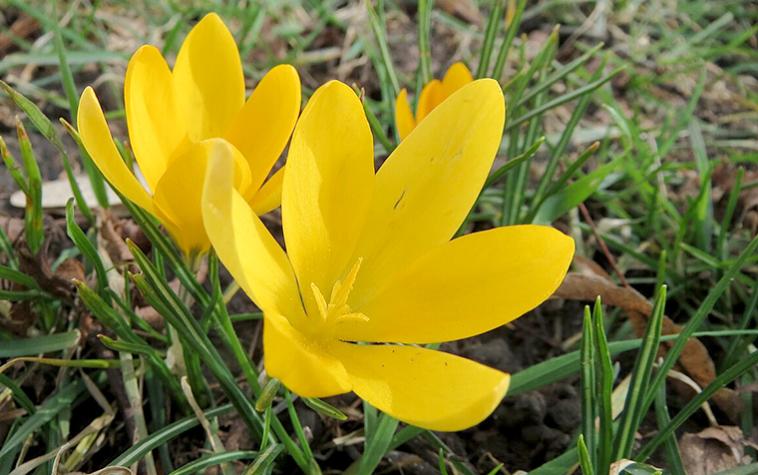 Crocus chrysanthus. Public domain image via WikiMedia Commons.
COLUMBIA, Mo. – October is a good time to plant spring-flowering bulbs for them to establish a good root system before the soil cools, said University of Missouri Extension horticulturist David Trinklein. While tulips and daffodils take center stage when planting bulbs at this time of the year, other species such as crocus should not be overlooked.
One novel way to enjoy crocus blossoms in the spring is to plant them in your lawn. Planting a crocus lawn is an easy way to bring early color to the landscape with minimal effort. As one of the first flowers to bloom in spring, crocuses create a colorful display that signals the end of winter and foretells of warmer days to come. Once established, crocus lawns are low-maintenance and will continue to offer a welcome burst of early color year after year. Additionally, crocuses provide a crucial food source for pollinators, especially bees, in the early spring when few other plants are in bloom.
A crocus lawn blooms early in the season, and the foliage quickly dies back naturally. This is an advantage for gardeners eager to start mowing their lawns at the usual time in spring. The flowers bloom and fade, allowing the foliage to store food reserves in the bulbs for next year’s blooms before mowing begins.
Except for a handful of fall bloomers, nearly all crocus species work well for crocus lawns. Winter-hardy in zones 3-8, they naturalize with ease, extending the gardening season by months. Crocus flowers bloom in stunning shades, from rich purples and lavenders to cheerful oranges, yellows, creams, whites and stripes. Whether you plant them in a single color or a mix, they create a vibrant display that will brighten your lawn every spring.
Crocus species for lawns
- Crocus chrysanthus, or snow crocus, is an early-blooming species known for its small, vibrant flowers that come in yellow, white and blue. Native to the Balkans and Turkey, it thrives in well-drained soil and full sun. Its delicate blooms emerge in late winter or early spring, often before snow melts.
- Crocus vernus, or giant crocus, is a hardy, early-blooming perennial native to Europe. It produces large, vibrant flowers in shades of purple, white and striped varieties. Thriving in well-drained soil and full sun, it naturalizes easily, making it a popular choice for gardens and lawns.
- Crocus tommasinianus, or Tommy (or Tommies) crocus, is an early-flowering species known for its delicate, lilac-purple blooms. Native to southeastern Europe, it thrives in well-drained soil and naturalizes easily in gardens and lawns. Blooming from late winter to early spring, it is more resistant to pests like squirrels than other crocus species because its corms have a slightly bitter taste.
- Crocus flavus, or yellow crocus, is a perennial flowering plant in the iris family. Native to southeastern Europe and Turkey, it blooms in early spring with bright golden-yellow flowers. This hardy, low-maintenance plant thrives in well-drained soil and is popular for naturalizing in gardens and lawns.
Crocuses prefer a well-drained, fertile soil along with full sunlight or light shade. For best results, choose a spot that gets at least six hours of direct sunlight each day. While crocuses prefer sandy or loamy soil, they are surprisingly adaptable and can grow in sandy or clay soil if the ground doesn’t stay soggy. As with all bulbs, poor drainage and waterlogged soil can lead to poor growth and ultimate bulb loss.
The best time to plant crocuses is in the fall, ideally several weeks before the first frost. This gives the bulbs time to establish strong roots before the cold of winter set in. When planting, dig small holes about 3-4 inches deep, placing the bulbs with their pointed ends facing upward. Space them about 3-4 inches apart to allow room for healthy growth and proper air circulation. A bulb auger attached to a cordless drill will make planting much easier.
Adapted from an article by the National Garden Bureau.
Photo
Crocus chrysanthus. Public domain image via WikiMedia Commons.
