-
Image
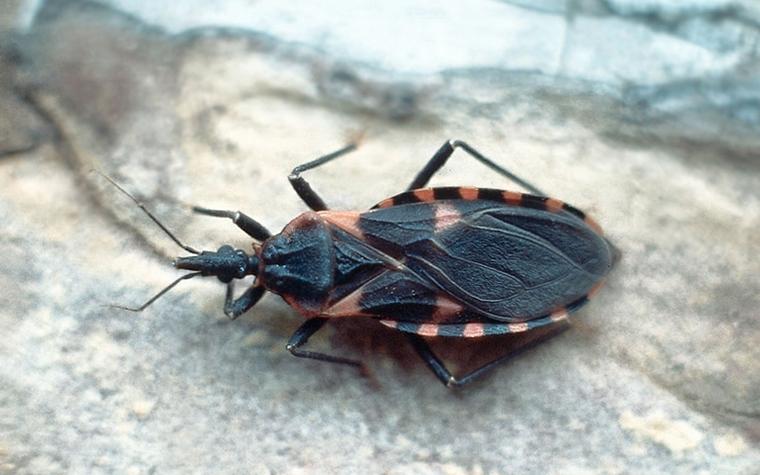 Triatoma sanguisuga, a species of kissing bug. Photo courtesy of the Kansas Department of Agriculture, Bugwood.org.
 -
Image
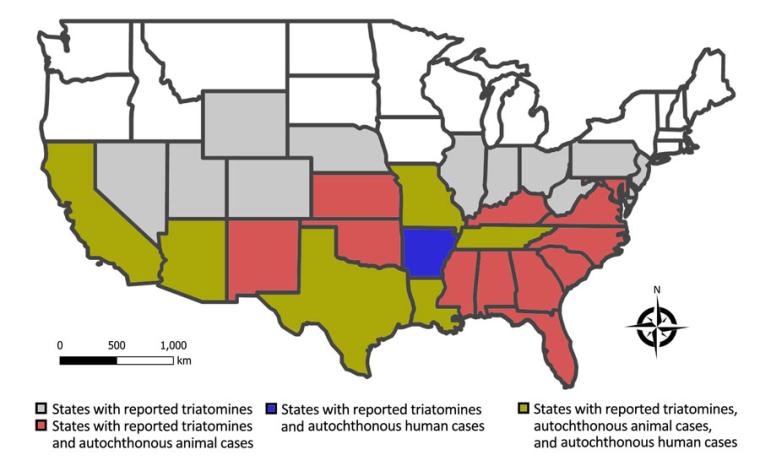 Centers for Disease Control and Prevention.
COLUMBIA, Mo. – As Valentine’s Day approaches, many are hoping for sweet chocolate and maybe even a swoonworthy smooch, not a kiss from the triatomine bug.
This insect, commonly called the “kissing bug,” transmits Chagas disease by biting and then pooping around the bite, says Emily Althoff, urban entomologist with University of Missouri Extension and Lincoln University.
Althoff says interest in the kissing bug and Chagas disease has increased since the U.S. Centers for Disease Control and Prevention published a paper last September declaring that Chagas disease is endemic in the U.S.
While Missourians should understand the insect and the disease, there’s no need to panic, she says. Only one locally transmitted case has been verified in the state, and that was in 2017, according to the Missouri Department of Health and Senior Services.
Chagas disease infects humans as well as wildlife and domestic animals, especially dogs. It is mainly spread by the kissing bug, but it can also be transmitted congenitally, orally and through contaminated food or drink. It causes fever, rashes, swelling and other symptoms in its early stages in infected persons. Left untreated, it can cause serious cardiac and digestive problems.
In the U.S., it has been reported mostly in southern states, particularly Texas, and has been found in opossums, raccoons, woodrats and armadillos.