Immersion program helps students explore careers in rural healthcare.
-
Image
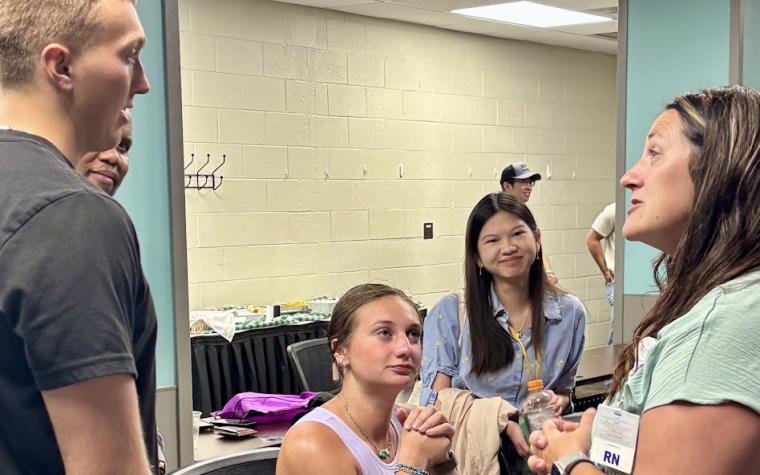 Rural Immersion students meet with Bridget Kenny, an RN at Mosaic Medical Center in Maryville.
 -
Image
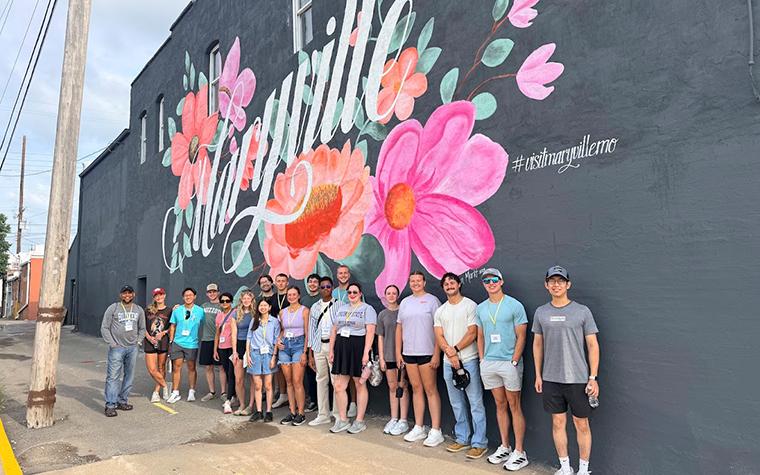 The MU Rural Immersion Program helps students in healthcare fields explore careers in rural communities.
 -
Image
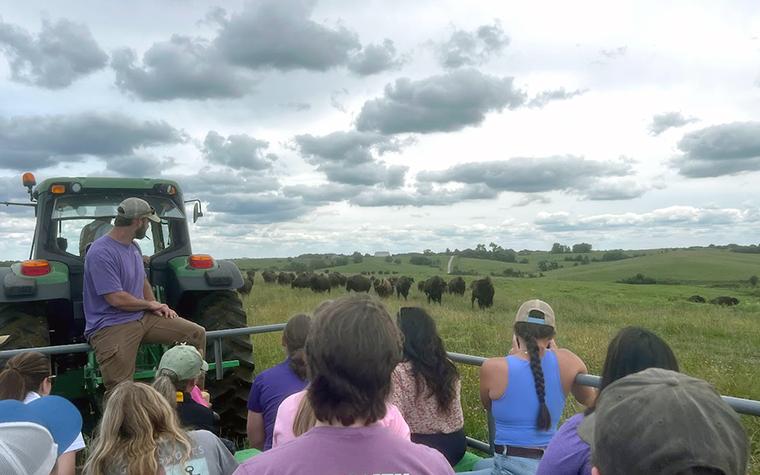 The MU Rural Immersion Program tour of northwestern Missouri included a visit to Dunn Ranch Prairie, a nature and wildlife area in Harrison County, Mo.
A group of 19 students pursuing healthcare careers at Missouri universities spent five days exploring what makes rural communities healthy during the 2026 Rural Immersion Program, a partnership between the University of Missouri School of Medicine’s Rural Scholars Program and University of Missouri Extension.
“The program is designed to help future healthcare professionals determine whether living and working in a rural community could be a good fit,” said Jen Osborn, MU Extension engagement specialist.
This year’s Rural Immersion Program traveled through Grundy, Mercer, Harrison, Gentry and Nodaway counties, giving students a firsthand look at factors that shape health in northwestern Missouri. Along the way, they learned how healthcare intersects with agriculture, education, economic development, natural resources, behavioral health and community culture.
“The Rural Immersion Program helps students understand that healthcare extends far beyond hospital or clinic walls,” Osborn said. “When future healthcare professionals see how these communities work together to address issues, including healthcare, they begin to understand what makes rural Missouri such a rewarding place to live and work.”
Throughout the week, students heard from healthcare providers, emergency services professionals, nurses, dentists, social workers, administrators and other regional experts. Discussions focused on issues facing rural healthcare, including workforce shortages, access to care, healthcare costs and policy challenges.
Students toured several healthcare facilities, including Wright Memorial Hospital in Trenton, Mosaic Medical Center in Maryville and the Nodaway County Public Safety Building.
The program introduced participants to the social, cultural and economic factors that influence health outcomes. Students met with local officials, educators, agricultural producers and community organizations to learn how different sectors contribute to community well-being.
Visits to the MU Extension Hundley-Whaley Research Center, Shelburne Hills Farm and Dunn Ranch Prairie highlighted the roles of agriculture, conservation and environmental stewardship in supporting rural economies and quality of life. Students learned how organizations such as GRM Networks and local economic development agencies strengthen communities through broadband expansion, business development, childcare initiatives and long-term planning.
The program concluded at the Mozingo Event Center, where students presented what they had learned about rural healthcare and rural practice. Many described challenges in rural medicine as opportunities for professional growth and emphasized the importance of interdisciplinary teamwork and community involvement. Participants discussed how providers often take on broader roles in rural communities, building relationships that extend beyond traditional healthcare settings.
For many students, the experience changed how they view rural healthcare.
One participant said hearing rural physician Tammy Hart describe herself as “a friend who is a physician” reshaped their understanding of community-centered care by illustrating how meaningful relationships are built long before patients enter a clinic. Another student said seeing physicians serve as mentors, volunteers and community leaders strengthened their interest in pursuing rural family medicine.
The Rural Immersion Program highlights how community partnerships can inspire the next generation of rural healthcare professionals, Osborn said. By providing an in-depth look at rural life, the program showcases the innovation, resilience and collaboration that define Missouri’s rural communities.
“The northwest region of Missouri really welcomed these students and rolled out the red carpet,” said Randa Doty, MU Extension engagement specialist. “This was a great learning opportunity and experience for the communities and for the students. The connections made during this program have been amazing.”