-
Image
 Adobe stock photo
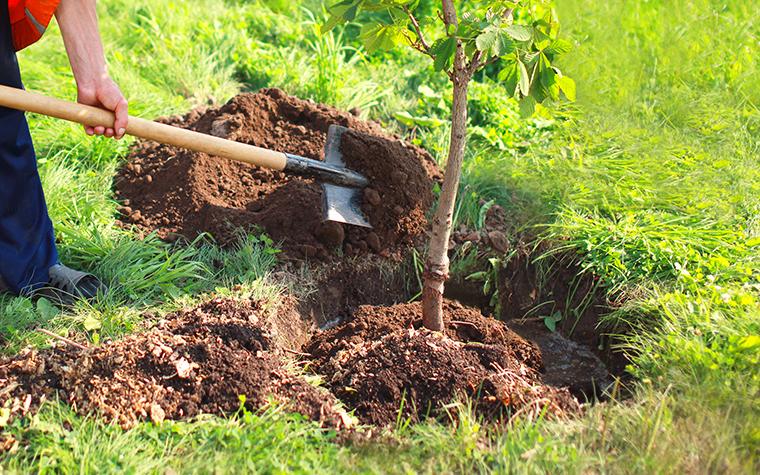
COLUMBIA, Mo. – We often see “Fall is for planting” advertisements at nurseries, garden centers and other retail outlets during late summer and early fall.
“While the primary motivation for the ads is to increase sales, the message is good advice from the standpoint of sound horticultural practices, and is especially true for trees and shrubs,” said University of Missouri Extension horticulturist David Trinklein.
There are several advantages to fall planting. One is convenience. In fall, there often is more time to do a good job on what can be a labor-intensive task. There are fewer demands for pruning and weed control and other landscape-maintenance chores. And when the soil is still warm and the air becomes cooler, there is less stress on plants while the roots grow and become established.
In fall, many deciduous trees and shrubs are approaching dormancy or already may have dropped most of their leaves. This means they will not lose large amounts of moisture like in spring when new leaves and top growth develop rapidly, often at the expense of root growth. The absence of this stress allows energy to go into the production of new feeder roots that prepare the plant for next year’s spring growth.
The ideal time for fall planting depends in part on geographic location. In the Midwest, trees and shrubs may be planted from September through October. This allows time for good root development before the soil cools. This does not mean that trees or shrubs cannot be planted later. However, since root growth correlates with soil temperature, there may be little or no root growth until the soil warms in spring.
If planting nursery stock in good soil, little if any improvement will be needed to the “back-fill” soil used around the root ball. For heavier soils, adding one part organic matter to two parts of existing soil (by volume) can help speed root establishment. If the roots are growing in almost total organic matter (as in the case of some container-grown stock), remove some of the growing medium from the upper and central area of the root ball. This lets heavier back-fill soil settle closer to the base of the trunk, next to the root system.
A general rule is to never plant trees or shrubs deeper than they were growing. Holes that are wide but not deep are best. Wide holes (two to three times root ball diameter) provide more room for amended back-fill soil; shallow holes reduce the tendency for plants to settle. With balled and burlapped nursery stock, remove the upper ring of wire supporting the soil ball and loosen the twine used to hold the burlap to the tree trunk.
Watering a tree after planting is just as important in the fall as is in spring. Make sure the root ball is well watered as the back-fill soil is added to the hole. If dry weather follows planting, keep the root ball moist, but be sure not to overwater. There is not a rapid moisture uptake by plants in the fall, but water still is needed
The decision to stake a newly planted tree depends on both the plant and location. Staking prevents the root ball from shifting and shearing off newly formed feeder roots. A plant with a large, massive root ball often is heavy enough to sit firmly in the soil and avoid shifting. Plants with small, lightweight root masses, such as container-grown plants, may need support.
Wires and other staking materials can injure sensitive young trunks if kept too taut, so support should not restrict the trunk from moving slightly. As a general rule, stake a tree only as high as necessary to keep the root ball steady but still allow the upper trunk to move in the wind. Light, corrective pruning also can be done at the time of staking. Additionally, if sun scald is a concern, wrap the trunk of the tree with a light-colored material.
This advice is for trees and shrubs that are very hardy. Marginally hardy species are better saved for spring planting at Missouri’s latitude, since there is the chance of cold injury if winter is severe. If such plants must be fall-planted, plant as early as possible to allow for maximum root growth. Anti-transpirants can help protect marginally hard plants such as broad-leaved evergreens during their first winter after planting.