However, choose carefully before you plate them.
-
Image
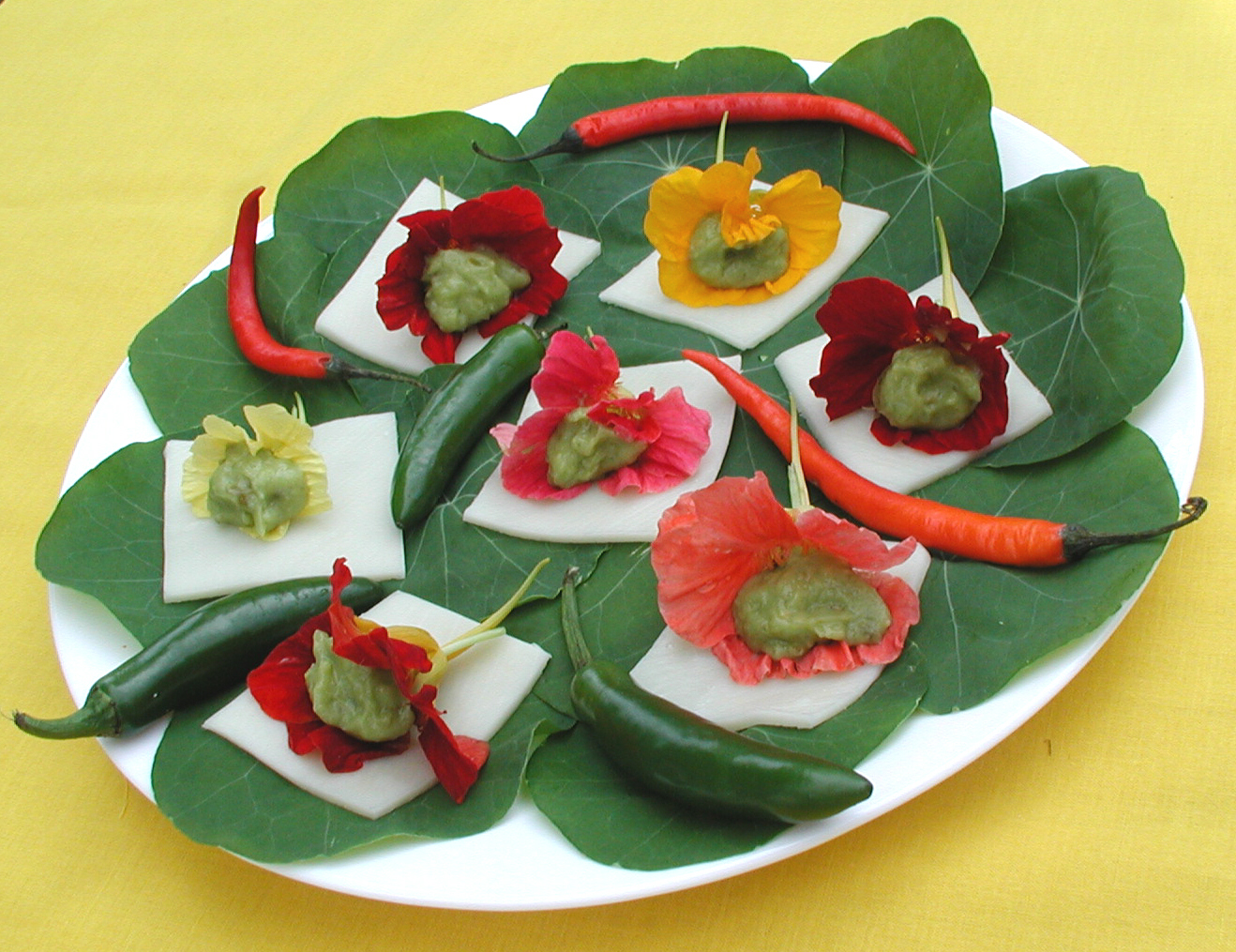
 South-of-the-border guacamole in nasturtium flowers makes a colorful appetizer. Photo by Michele Warmund.
 -
Image
 A luscious lavender shortbread is perfect for tea time. Photo by Michele Warmund.
COLUMBIA, Mo.— For centuries, people around the world have used flowers for cooking, said University of Missouri Extension horticulturist David Trinklein.
“The popularity of this culinary practice peaked during the Victorian era in England, and then waned until recently,” Trinklein said. “Today using flowers in meal preparation is having somewhat of a resurgence.”
Most often, flowers are added to dishes for both aesthetic appeal and flavor, he said. In essence, these flowers can be enjoyed first in the landscape and later at the dinner table. Although edible flowers are most popular in salads, new and ingenious uses for colored petals are being developed that open a new era in the culinary arts.
Safety first
First and foremost, only eat flowers known to be nontoxic, said Trinklein. “If you are in doubt, pass them by. Never experiment by eating plant parts unless you are sure they are harmless.”
Even if a flower is known to be edible but you have not sampled it before, do so in a small, exploratory manner. Like any food, some people may have sensitivity or allergic reactions to plants deemed safe for others. Also, make sure that the production history of the flowers to be consumed is known. Pesticides not labeled for food sources might have been used on the flowers, making them unsafe to eat.
Popular edibles
Several flower species that have proven to be popular as edibles include:
Calendula (Calendula officinalis), a cool-season annual with daisy-like blooms in colors of orange, yellow and bicolor. Its flavor has been described as mildly peppery, tangy and with saffron-like undertones.
You can sprinkle calendula petals on salads, infuse them in oils or vinegar or dry and use as a natural food dye. Additionally, they make great cut flowers and bloom until frost.
Nasturtium (Tropaeolum majus), a warm-season annual with round leaves and colorful flowers in shades of red, orange and yellow. Its flavor has been described as peppery and like arugula. Add flowers to salads or pasta, or stuff with herbed cheese. The seed pods of nasturtium are often pickled and used as imitation capers.
Nasturtium thrives in poor soil and blooms from late spring to early fall. Its leaves also are edible.
Pansy (Viola x wittrockiana), a highly versatile edible flower featuring a mild, slightly sweet or vegetable-like flavor. It is popular for adding color to salads and cakes, with petals that can be used fresh, candied or frozen into ice cubes. Pansy flowers contain vitamins A and C.
Lavender (Lavandula angustifolia), a versatile, aromatic herb that has transitioned from use in traditional medicinal and aromatherapy to become a popular edible flower. When properly used, it enhances dishes with a sweet, citrusy and floral essence. It has a complex flavor profile that pairs well with sweet, savory and herbaceous ingredients.
Lavender is a member of the mint family of plants.
Squash blossoms (Cucurbita spp.), the edible, vibrant yellow or orange flowers of species of the genus Cucurbita. Examples include zucchini, pumpkin and summer squash. Highly prized for their delicate, subtly sweet flavor reminiscent of young zucchini, these flowers are considered a culinary delicacy. Traditionally, blossoms are stuffed with ricotta, mozzarella or other types of cheese, then battered and fried until crispy. They also can be eaten fresh.
Squash plants bear separate male and female flowers. Removing the stamens from male flowers and the pistil from female flowers tends to improve taste.
Whether you are harvesting herbs for a backyard dinner or sprinkling petals on a summer salad, these plants invite you to savor the season with all your senses, Trinklein said. So, pluck a blossom this spring and bring your garden to the table.
Photos
A luscious lavender shortbread is perfect for tea time. Photo by Michele Warmund.

South-of-the-border guacamole in nasturtium flowers makes a colorful appetizer. Photo by Michele Warmund.