-
Image
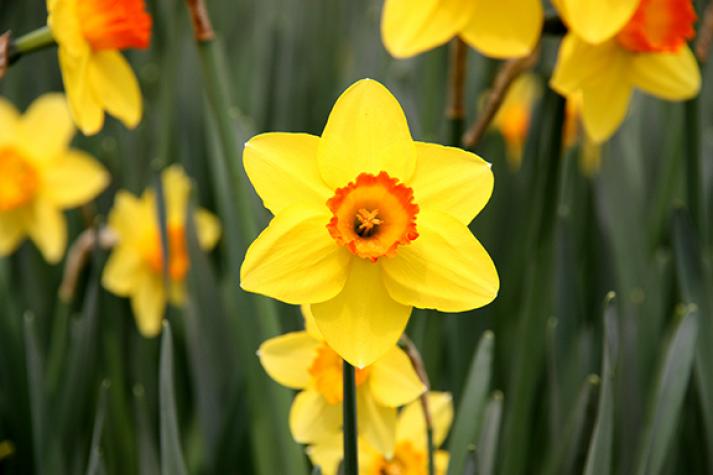 Narcissus (daffodil). Photo by Kham Tran. Shared under a Creative Commons license (CC BY-SA 3.0).
COLUMBIA, Mo. – If you think autumn is the time to put away your gardening tools for the year, think again. It’s bulb-planting time.
“Daffodils, tulips and hyacinths won’t greet you in the spring if they’re not planted in the fall,” said University of Missouri Extension horticulturist David Trinklein. “The bulbs of spring-blooming plants should be planted in October so they can go through a cooling process during the upcoming winter.”
Bulbs planted now will develop root systems this fall, but it takes the low temperatures of winter to cause flower buds to emerge next spring, Trinklein said. So, you shouldn’t wait.
Choosing spring-flowering bulbs to grow in Missouri can present a dilemma. Daffodils are the best choice for the Show-Me State because they handle Missouri’s warmer temperatures and keep blooming year after year. “In other words, they naturalize well in our state,” said Trinklein.
Tulips, on the other hand, are not completely comfortable with Missouri’s late spring and early summer temperatures and will likely need to be replanted every couple of years. In most formal plantings, tulips are treated as annuals in Missouri.
“Hyacinths are the worst with regards to adapting to Missouri temperatures,” he said. Temperatures rise too quickly in spring for them to store food in their bulbs for next spring’s flowers, so after producing attractive flower stalks packed with vibrantly colored florets the first year, they tend to decline in subsequent years.
When selecting, pick bulbs that are nice and fat and plump. Avoid shriveled bulbs because they’re either contracting a disease or already have one.
Once you bring bulbs home, prepare the soil ready before planting. Good drainage is a must. If bulbs sit in damp soil over the winter, there is a good chance they will rot.
To measure soil drainage, dig a hole about 12 inches deep, fill it up with water and let it drain. Then, refill it with water and measure the depth of the water. Measure the depth again in 15 minutes and multiply the amount drained by four. This determines drainage rate per hour. Soil that drains less than 1 inch per hour has poor drainage and is not suitable for bulbs. Gardeners can improve drainage by amending it with compost, peat moss or other well-decomposed organic material.
While you’re amending the soil, it’s a great time to add fertilizer. Bonemeal is an excellent choice for bulbs, Trinklein said. It’s relatively high in phosphorus, which helps bulbs develop good root systems. And it’s relatively low in nitrogen so it won’t burn the roots. It also adds a modest amount of potassium.
When you place bulbs into the ground, it’s important to plant them deep enough, but not too deep.
Bulbs should be planted to a depth of about two to three times the height of the bulb. This makes sure the bulb doesn’t push itself out of the soil as it develops roots.
Planting bulbs in the autumn is an exercise in delayed gratification, said Trinklein. There are no immediate rewards for your labor. No sudden leaves, vibrant colors, or fragrant blooms to admire before winter sets in. Instead, you must trust the silent, invisible process occurring beneath the soil, letting the bulbs endure months of cold temperatures and quiet dormancy.
It requires patience to look at a bare, frozen garden bed all winter and hold onto the promise of what is to come, Trinklein said. “When the ground finally thaws and the first warm rays of spring arrive, that patience is rewarded with a delightful display of color, proving that the most beautiful things in life are indeed worth waiting for.”