MU Extension offers scouting, identification and management options.
-
Image
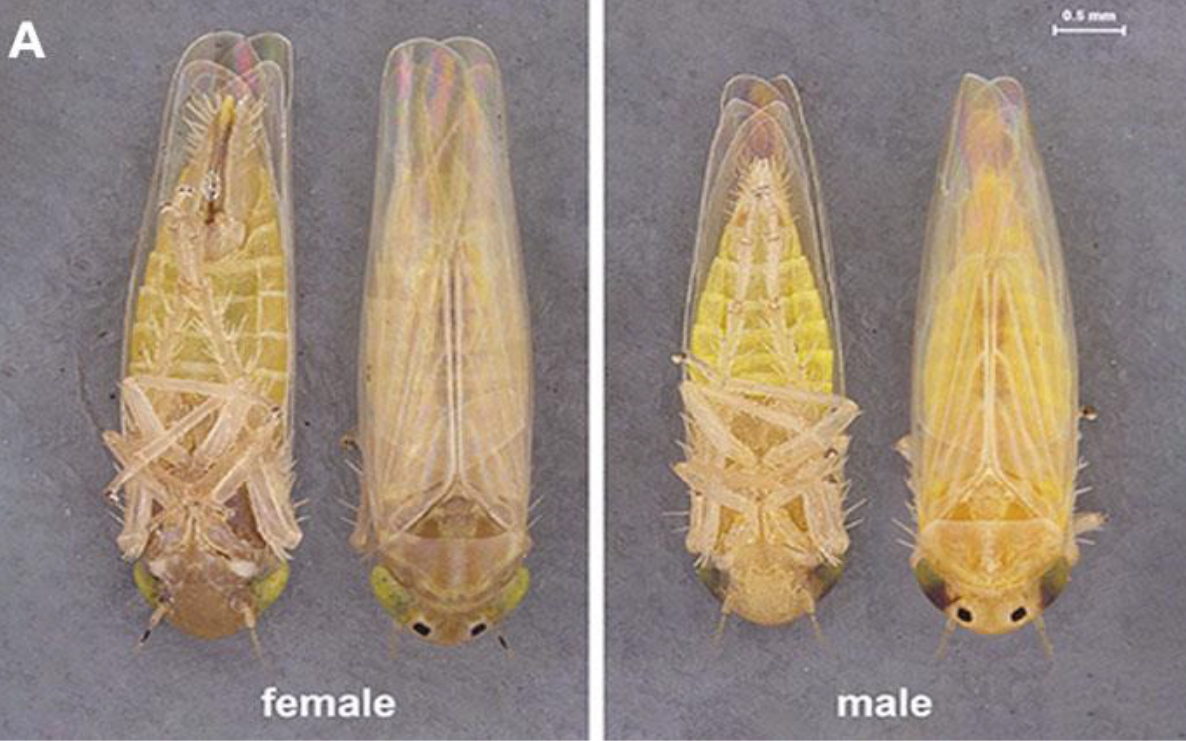
 Corn leafhopper can be recognized by two black dots between the insect’s eyes and no facial markings. Photo by Ivair Valmorbida.
 -
Image
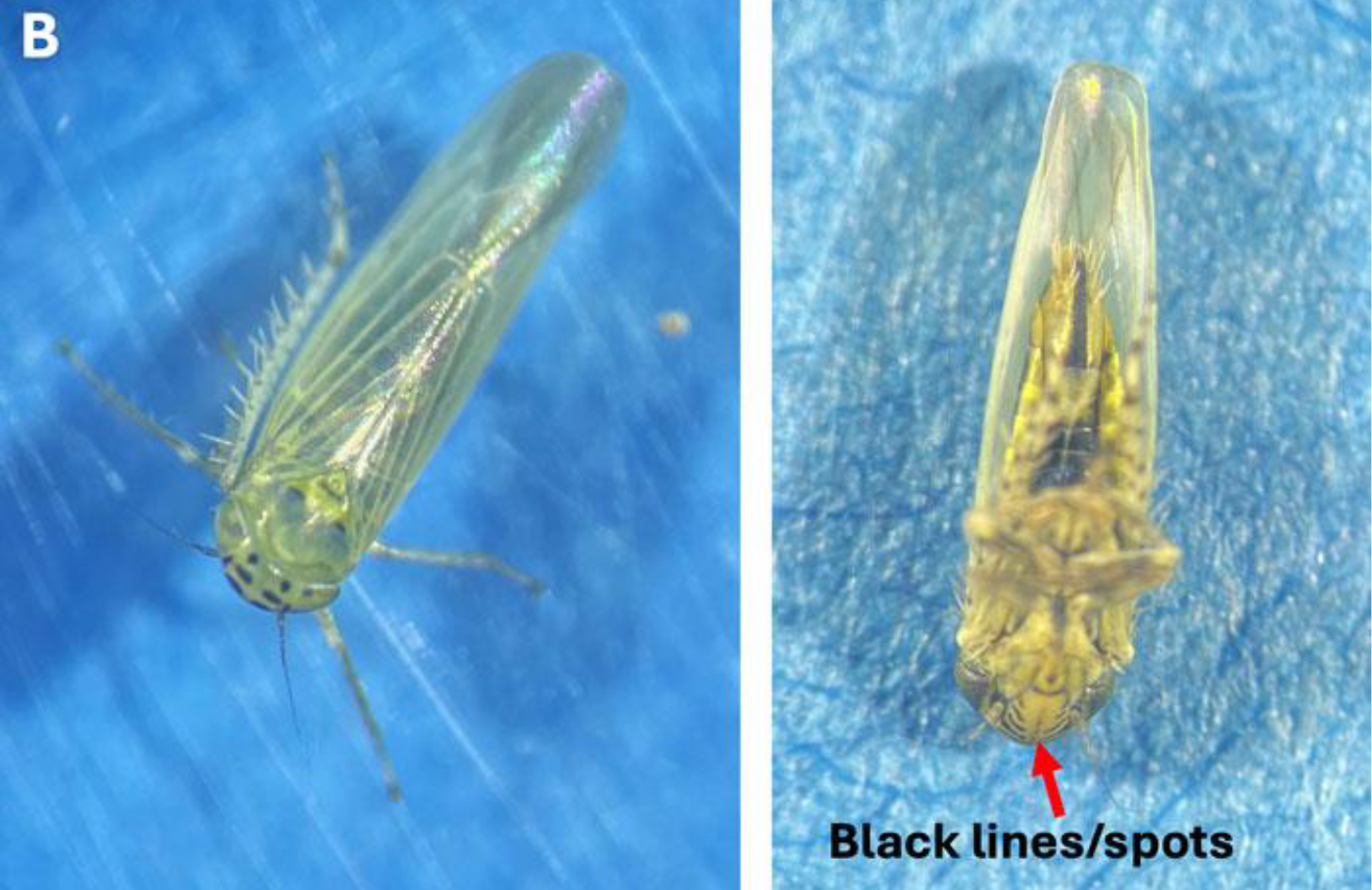
 Aster leafhopper has a tan body and facial markings on the head. The aster leafhopper also has two black dots between the eyes. However, the light/white halos are not present. Photo by Ivair Valmorbida.
 -
Image
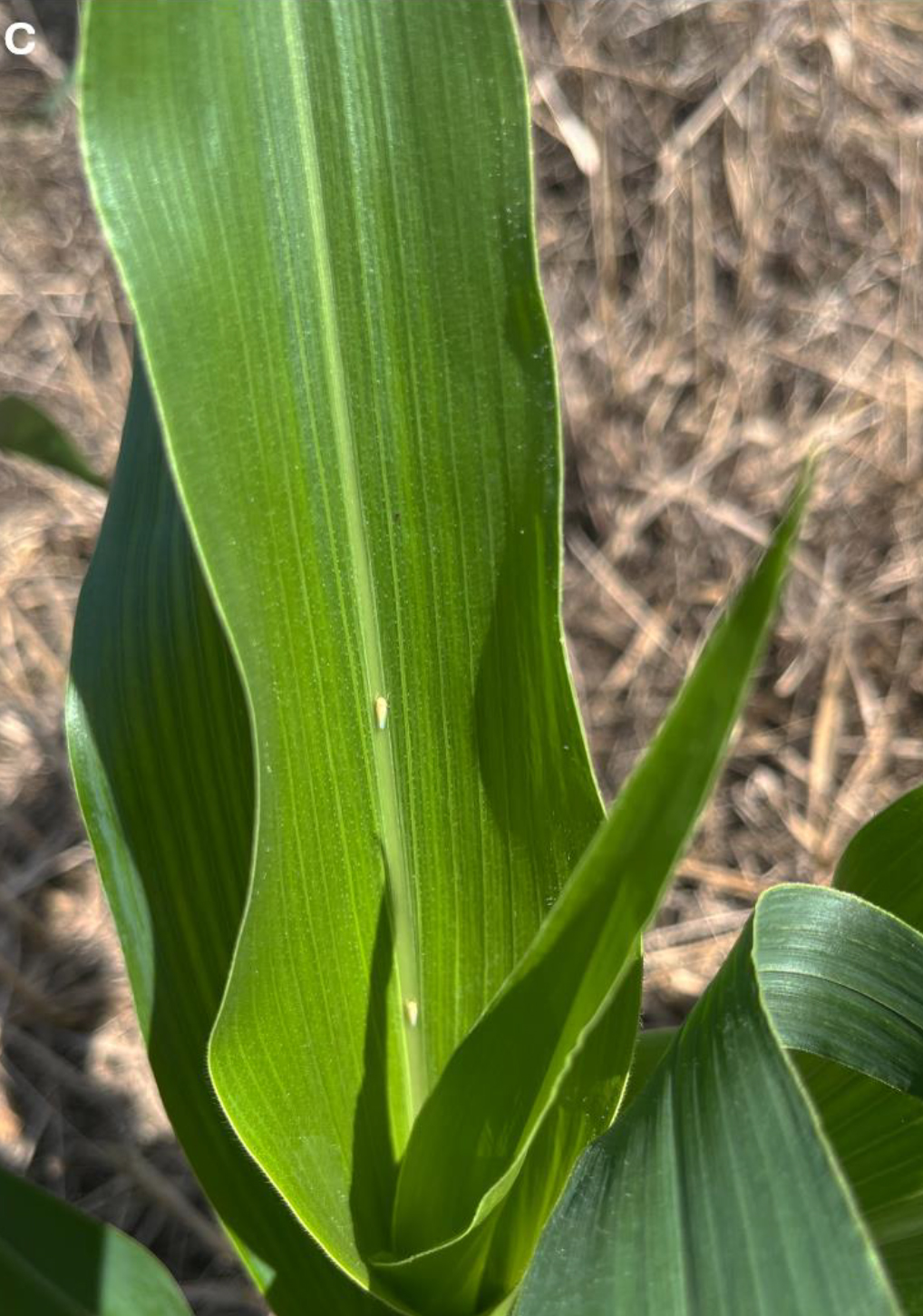
 Corn leafhoppers appear in the whorl of a corn plant. Photo by Ivair Valmorbida.
COLUMBIA, Mo. – On June 16 and June 22, corn leafhoppers were detected in Missouri cornfields during routine field scouting in Boone County. These fields are part of in-season monitoring led by University of Missouri Extension state row crop entomologist Ivair Valmorbida.
Corn leafhoppers were collected directly from corn plants at the V5 growth stage. No corn leafhopper nymphs were found, suggesting these adults are migrants from the southern United States, said Valmorbida.
The first detection of 2026 in Missouri occurred about three weeks earlier than in 2025. Corn leafhoppers were also detected in Oklahoma in early June.
Research from South America, where corn leafhoppers are a greater concern, has shown that significant yield losses can result from infection by corn stunt pathogens during vegetative growth stages, from emergence (VE) through tasseling (VT), as affected plants have more time to develop symptoms.
“It is not yet known whether the corn leafhoppers detected in Missouri carry corn stunt pathogens,” Valmorbida said. “Growers should assume any corn leafhopper could be infectious.” Corn stunt pathogens were detected in Missouri in both the 2024 and 2025 growing seasons.
Several of the fields scouted also had aster leafhoppers, Macrosteles quadrilineatus (Hemiptera: Cicadellidae), a species native to North America. Aster leafhoppers are common in Missouri cornfields, and they are not known to carry corn stunt pathogens, said Valmorbida.
Adult corn leafhoppers are about 1/8 inch in length and vary in color from pale yellow to white. A key distinguishing feature is a pair of dark spots between the eyes, each with a white halo around it. The corn leafhopper has no additional facial markings. The aster leafhopper also has two black dots between the eyes, but these lack the white or light yellow halo. Additionally, the aster leafhopper exhibits facial markings (lines or spots), darker wing veins and a generally darker abdomen.
With the detection of corn leafhoppers in the state, growers should scout cornfields, particularly those at growth stages before R1. Visual scouting may be ineffective if insect numbers are low. For more accurate monitoring, consider using a sweep net or a battery-powered vacuum with a pantyhose stocking over the funnel. Check field edges and the interior of the fields. When performing visual scouting during the vegetative growth stages, focus on the whorl, where corn leafhoppers often remain concealed.
“Management of corn leafhoppers is complex and should involve multiple practices to reduce both the insect population and sources of disease inoculum,” said Valmorbida.
No economic threshold has been established for corn leafhopper in the United States. Current recommendations suggest foliar insecticide applications may be warranted when corn leafhoppers are detected in fields before the R1 growth stage, Valmorbida said.
When selecting an insecticide, growers should consider those that are soft on natural biological control. In addition, growers must follow insecticide label recommendations.
More information is available in MU Extension publication G7109, Biology and Management of Corn Leafhopper, which is available for free download.
Photos
Corn leafhopper can be recognized by two black dots between the insect’s eyes and no facial markings. Photo by Ivair Valmorbida.
Aster leafhopper has a tan body and facial markings on the head. The aster leafhopper also has two black dots between the eyes. However, the light/white halos are not present. Photo by Ivair Valmorbida.
Corn leafhoppers appear in the whorl of a corn plant.