-
Image
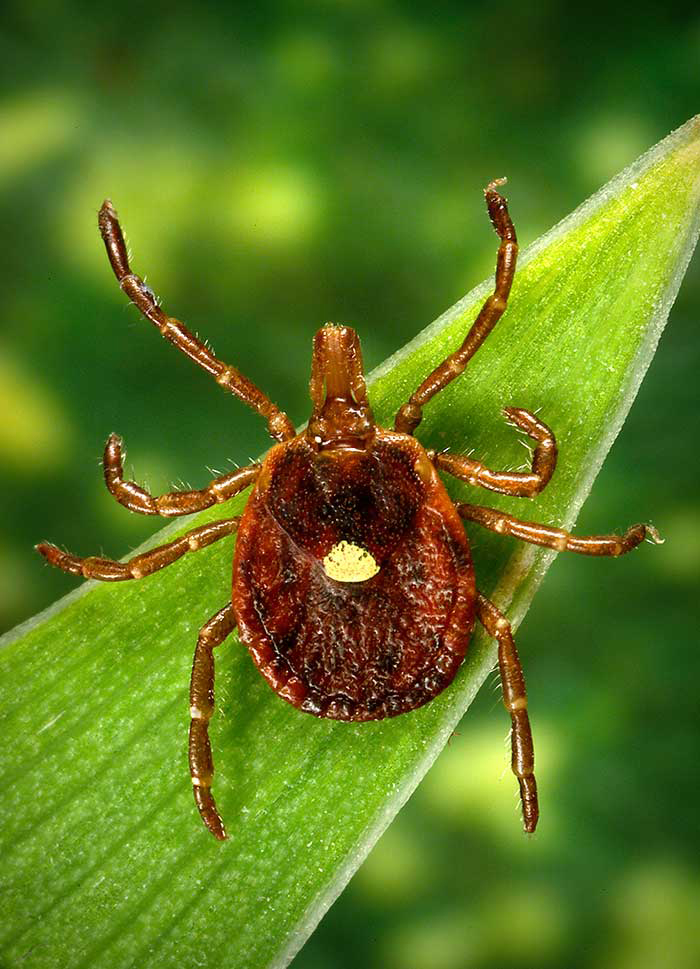
 The lone star tick, one of the most common tick species in Missouri, can spread Heartland disease, first found in Missouri in 2009. Female lone star ticks can be identified by the white dot in the center of the back. Photo courtesy U.S. Centers for Disease Control and Prevention.
COLUMBIA, Mo. – Missouri’s changing weather patterns are creating more favorable conditions for ticks, increasing concerns for the agricultural community and anyone who spends time in fields, forests or backyards.
Warmer winters, earlier springs and periods of high humidity allow ticks to survive in greater numbers, become active earlier in the year and remain active later into fall, says University of Missouri Extension state climatologist Zachary Leasor.
Milder winters boost tick survival
Traditionally, Missouri’s cold winters helped reduce tick populations. That natural control is weakening as winters become more mild. In Missouri, the state’s average wintertime temperature has been warmer than average eight of the last 10 years.
Blacklegged ticks, lone star ticks and American dog ticks—all common in Missouri—can survive winter conditions by sheltering under leaf litter, crop residue and snow cover, says University of Missouri Extension urban entomologist Emily Althoff.
When winter temperatures rise above freezing, ticks can become active even in midwinter.
“These shifts are contributing to increased tick encounters and a growing risk of tick-borne diseases, including alpha-gal syndrome, across the state,” says Althoff.
Earlier springs and longer tick seasons
For Missouri producers and outdoor enthusiasts, the most noticeable change may be that tick season starts earlier and lasts longer.
Ticks typically become active when temperatures reach about 45 degrees Fahrenheit. Missouri has experienced a very warm spring in 2026. Temperatures from Feb. 1 to April 15 have been about 8 F above average across the state, with March ranking as the state’s fourth warmest on record.
With milder temperatures, ticks may begin actively seeking hosts, including wildlife, livestock and people, earlier than in the past. Activity can now extend well into late fall during mild years.
Wet conditions create ideal tick habitat
Ticks thrive in warm, humid environments. Periods of above-average rainfall, especially when combined with moderate temperatures, create ideal conditions along field edges, wooded draws and fencerows commonly found on Missouri farms. After a dry winter, most of Missouri has had a rainy March and April as temperatures rose.
Lone star ticks, which are flourishing under warmer conditions, are linked to diseases such as ehrlichiosis and alpha-gal syndrome, a condition causing a red meat allergy.
Impacts on livestock and working animals
Ticks are not only a human health issue, says MU Extension state veterinarian Craig Payne.
Heavy tick infestations can reduce weight gain in cattle, transmit diseases and increase veterinary costs. Dogs that accompany farmers, hunters or hikers are also at risk and can bring ticks into homes and vehicles.
Tips for farmworkers
Manage vegetation by mowing field edges, trimming fencerows and reducing brush near barns and work areas to help limit tick habitat.
Experts recommend wearing long sleeves, long pants and boots when working outdoors. Tuck pants into socks or boots and choose light-colored clothing to make ticks easier to spot. EPA-approved insect repellents containing DEET, picaridin or permethrin-treated clothing add an important layer of protection.
Perform tick checks at the end of each workday and remove attached ticks promptly.
Livestock and working dogs should remain on veterinarian-recommended tick prevention to reduce exposure and keep ticks from being carried into equipment, vehicles or homes.
Resources
See related MU Extension publications available for free download:
- Ticks. Brief overview of common tick species in Missouri, tick-borne diseases and prevention and treatment of tick bites.
- Ticks and Tick-Borne Diseases. A more detailed guide from MU’s Integrated Pest Management program.
Related videos:
- Emily Althoff talks about ticks (YouTube short).
- MU researchers study ticks and alpha-gal syndrome (YouTube video).
MU Extension information and resources on alpha-gal syndrome.
Sidebar: Reducing risk outdoors
MU Extension recommends several practical steps to reduce tick exposure:
- Wear long sleeves and light-colored clothing when working or recreating outdoors
- Use EPA-approved insect repellents
- Perform tick checks after time in fields, woods or tall grass
- Manage vegetation around homes, barns and campsites
- Keep dogs and working animals on veterinarian-recommended tick prevention
Early tick removal significantly reduces the likelihood of disease transmission.
Photo
Lone star tick. The lone star tick, one of the most common tick species in Missouri, can spread Heartland disease, first found in Missouri in 2009. Female lone star ticks can be identified by the white dot in the center of the back. Photo courtesy U.S. Centers for Disease Control and Prevention.