-
Image
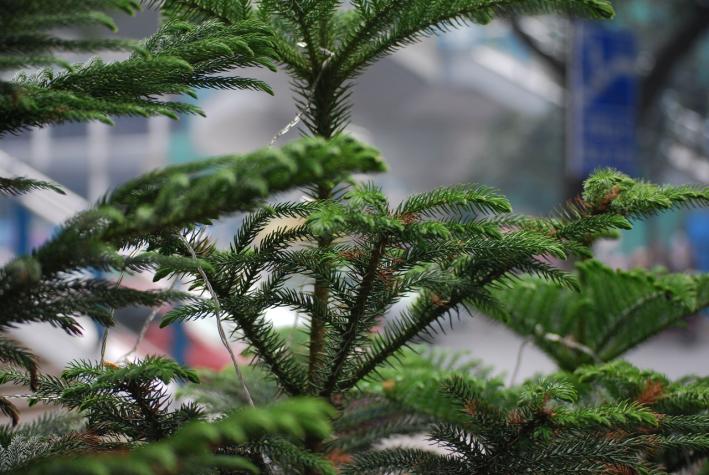 Norfolk Island pine.
COLUMBIA, Mo. – When most people think of Christmas trees, the South Pacific does not come to mind. Yet a small island between Australia, New Caledonia and New Zealand is the native home of a popular holiday houseplant that can serve as a living Christmas tree.
Norfolk Island pine (Araucaria heterophylla) makes an attractive indoor alternative to a cut tree, said University of Missouri Extension horticulturist David Trinklein.
Although it resembles a traditional pine, Norfolk Island pine belongs to the Araucariaceae plant family, which is native to the Southern Hemisphere.
Garden centers typically offer Norfolk Island pines in a range of sizes, from small tabletop plants to floor-sized specimens that rival a traditional Christmas tree in height. When selecting a plant, Trinklein recommends choosing one that appears vigorous, healthy and well-shaped.
It is normal for a newly purchased plant to drop a few needles after being brought indoors. This happens as the plant acclimates to lower light levels and a new environment and should stop once adjustment is complete.
Norfolk Island pine is considered a high-light houseplant and grows best with several hours of direct sunlight each day. Bright indirect light can also be adequate. In low light, growth may slow at the top while side branches continue to grow, resulting in a squat, less attractive plant. Poor light can also cause branch tips to weaken and droop.
Proper watering is equally important. If the plant becomes too dry, lower branches may droop, turn brown and eventually fall off. Too much watering can be just as harmful, leading to root rot and possible plant death. Water thoroughly when needed, letting excess water drain from the pot, and always discard standing water.
Norfolk Island pine requires minimal fertilizer, especially during winter. Feeding about once every four weeks during winter is usually sufficient, or plants may be fertilized more frequently using a very dilute solution.
When used as a living Christmas tree, Trinklein advises decorating with care. Avoid lights that produce heat, which can damage needles. LED lights are ideal because they remain cool and are lightweight. Avoid heavy ornaments, as they can permanently bend branches downward.
With proper care, a Norfolk Island pine purchased this holiday season can remain an attractive and meaningful part of holiday traditions for many years to come.