Image
New $47
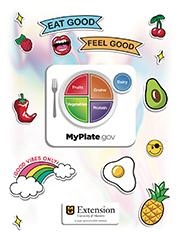
This two-pocket folder includes the MyActivity Pyramid and MyPlate graphics. It also has information and suggestions for daily calorie and food intake.
Revised $10
Editor's note
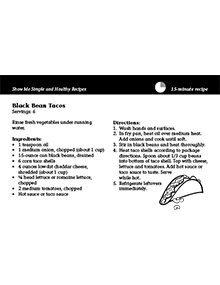
The following abstract describes a publication that is available as a downloadable PDF. It is also available printed as part of the NC1 Show Me Simple and Healthy Recipes set
Revised $10
Editor's note
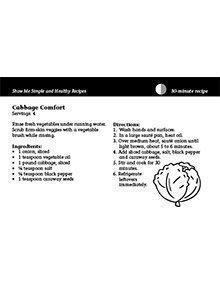
The following abstract describes a publication that is available as a downloadable PDF. It is also available printed as part of the NC1 Show Me Simple and Healthy Recipes set
Revised $10
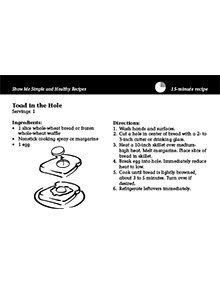
Simple, low-cost recipe featuring whole-wheat bread and egg, ready in 15 minutes. Includes nutrition info and food safety tips.
Revised $10
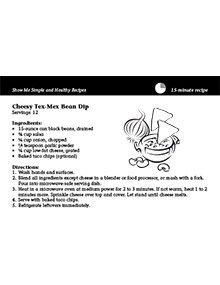
A quick, nutritious recipe for a Cheesy Tex-Mex Bean Dip, featuring black beans, salsa, onion, cheese, and garlic powder.
Revised $10
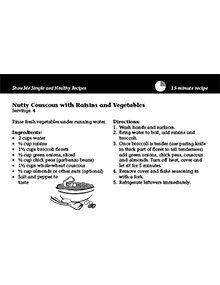
Quick and nutritious Nutty Couscous with Raisins and Vegetables combines wholesome ingredients for a simple, healthy meal.
Revised $10
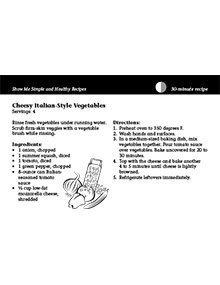
Quick, healthy veggie recipe with squash, peppers, and cheese.
Revised $10
Editor's note
The following abstract describes a publication that is available as a downloadable PDF. It is also available printed as part of the NC1 Show Me Simple and Healthy Recipes set
Revised $10
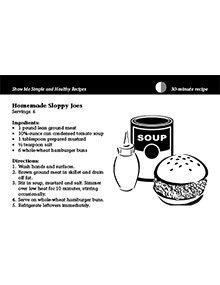
This publication offers a quick and affordable homemade sloppy joe recipe, ideal for nutrition education and SNAP-Ed programs.
Revised $10
Editor's note
The following abstract describes a publication that is available as a downloadable PDF. It is also available printed as part of the NC1 Show Me Simple and Healthy Recipes set
Revised $10
Editor's note
The following abstract describes a publication that is available as a downloadable PDF. It is also available printed as part of the NC1 Show Me Simple and Healthy Recipes set
Revised $10
Editor's note
The following abstract describes a publication that is available as a downloadable PDF. It is also available printed as part of the NC1 Show Me Simple and Healthy Recipes set
Revised $10
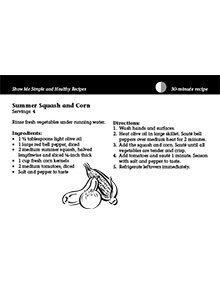
This publication offers a collection of 25 quick, nutritious recipes featuring summer squash and corn, using simple ingredients and minimal preparation time.
Revised $10
Editor's note
The following abstract describes a publication that is available as a downloadable PDF. It is also available printed as part of the NC1 Show Me Simple and Healthy Recipes set
Revised $10
Editor's note
The following abstract describes a publication that is available as a downloadable PDF. It is also available printed as part of the NC1 Show Me Simple and Healthy Recipes set
Revised $10
Editor's note
The following abstract describes a publication that is available as a downloadable PDF. It is also available printed as part of the NC1 Show Me Simple and Healthy Recipes set
Revised $10
Editor's note
The following abstract describes a publication that is available as a downloadable PDF. It is also available printed as part of the NC1 Show Me Simple and Healthy Recipes set
Revised $10
Quick, nutritious breakfast waffle pizza with fruit and yogurt—easy to make for busy mornings and healthy family meals.
Revised $10
Editor's note
The following abstract describes a publication that is available as a downloadable PDF. It is also available printed as part of the NC1 Show Me Simple and Healthy Recipes set
Revised $10
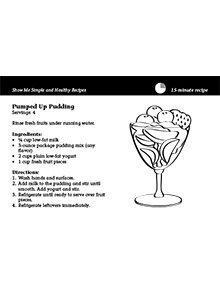
Quick, nutritious dessert featuring milk, pudding mix, yogurt, and fruit—ready in 15 minutes with clear instructions and nutrition analysis.
Revised $10
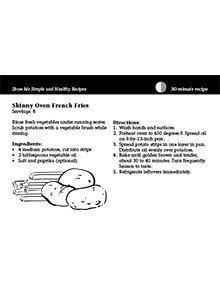
Quick, healthy oven-baked fries using potatoes, vegetable oil, and spices. Simple ingredients, easy preparation, and nutrition information included.
Revised $10
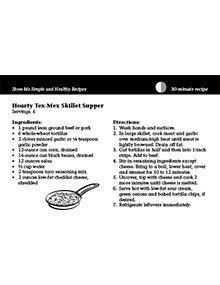
This recipe card offers a quick and affordable Tex-Mex meal featuring ground beef or pork, tortillas, black beans, corn, and cheese.
Revised
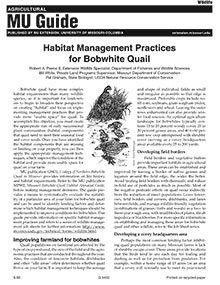
If you are a landowner considering lease hunting as a potential income-generating opportunity, learn what you need to consider beforehand. Sample leases are included in this University of Missouri Extension guide.
Revised $10
Editor's note
The following abstract describes a publication that is available as a downloadable PDF. It is also available printed as part of the NC1 Show Me Simple and Healthy Recipes set