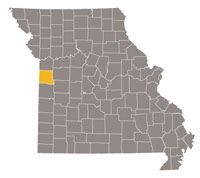
Location of Cass County Extension Center, Missouri

Cass County Extension Center

Goat production workshop series

This series of workshops is designed to provide goat producers knowledge in the areas of nutrition, reproduction, health and economics of raising goats. The goal is that goat producers would use knowledge from these workshops to improve there goat operation.  Workshop 1 - May 10, 2012, Workshop 2 - June 28, 2012
Goat production workshop series flyer (PDF) 


Home Food Preservation Workshops
                 

These workshops are designed for beginners or those who need to update their skills.  Hands-on experience with new recipes and sources of the
latest research.  Each session covers a specific preservation method to use for highest quality and safety in home preserved foods.  Solutions to
common problems and challenges when canning.  For more information contact University of Missouri Extension at 816-380-8460.
Preserve Your Harvest Safely (PDF)

Helping children learn to cope with stress

Stress is a natural response to change, demands, or pressures of life such as family changes, job changes, personal loss, illness, changes in life styles, etc.  Stress can be good as well as bad.  Stress can boost our energy to enjoy life more.  But too much stress can make us overwhelmed, unhappy, and cranky.

No matter how old we are, everyone experiences stress.  Children are not an exception.  They have stress too. They feel stress from time to time.  The sources of stress on children include going to day care or school for the first time, being away from home, constant changes in schools, neighborhoods, and child care arrangements, peer pressure, moving to new living environments, the birth of a sibling, birthday parties, vacation trips, dealing with strangers as an infant, fear of the dark, adjusting to a growing body during the preteen years, parent’s divorce or separation, parents being called to war, parent’s unemployment, family illness or death, family conflicts, violence in their homes and communities, natural disasters, etc.

Every child reacts to stress differently.  Some children seem to be born with easy going personalities. Other children tend to be upset and be disrupted by new situations and challenges easily.  Although we cannot change their personalities, we can teach children ways of managing stress and reducing harmful stress.  Here are some tips:

  • Spend one-to-one time with your children each day.
  • Keep communication lines open with your children.
  • Set clear rules and consequences and have realistic expectations. 
  • Encourage children to talk about what is bothering them.
  • Encourage healthy eating and physical activities.
  • Help children have enough sleep.
  • Identify the cause of the stress.
  • Teach children how to relax, make decisions, and solve problems.
  • Provide your children with a sense of security.
  • Monitor your own stress levels.  Be a role model for your children.

Nina Chen, Ph.D., Human Development Specialist

Don't bag your lawn clippings

You’ve probably mowed your lawn several times already this year, but have you been bagging your grass clippings?  Let’s hope not.  For many years homeowners have been under the impression that removing grass clippings leads to a healthier and better looking lawn.  In fact, it is difficult to buy a lawnmower these days, especially a push mower, without a bagging attachment.  These bagging attachments are unnecessary and bagging your grass clippings can actually be detrimental to a healthy lawn.

The biggest reason why people collect their grass clippings is because they believe that grass clippings cause thatch.  Thatch is a layer of undecomposed or partially decomposed grass roots, stems, crowns, runners, and lower shoots that build up between the soil surface and actively growing turf.  Research at the University of Missouri indicates that grass clippings do not contribute to the formation of thatch.  Grass clippings are composed primarily of leaf material that is high in moisture, about 80 to 85 percent, and breaks down very quickly.  Thatch layers will develop and dethatching should be a regular part of any lawn maintenance program, but it is not because clippings aren’t bagged.

There are many other reasons why clippings should be returned to the soil.  Grass clippings are high in nutrients and contain up to 25 percent of your lawn’s fertilizer needs.  Removing clippings leads to a lawn that is nutrient deficient and needs fertilizing more often.  Another reason is that yard wastes such as leaves, grass clippings, and tree limbs have been banned from Missouri landfills since 1992.  You can’t put your grass clippings in the trash.  Certainly grass clippings can be used as mulch or to produce compost if needed but it is still better to return those clippings, and the nutrients in them, back to the soil.

There are a few times when you may actually want to collect your grass clippings.  Most mowers come with the option of bagging, mulching, or side discharge but there are a few mowers that must have a bagging attachment in place to be safely used.  If this is the case, you should continue to collect grass clippings.  When a lawn is diseased it may be beneficial to collect grass clippings to reduce the population of the disease or to prevent it from spreading.  If a lawn is wet or excessively tall clippings may clump together and cause lawn damage. 

When you mow your lawn you should remove no more than one-third of the total plant height and the resulting clippings should be no more than 1 inch in length.  This helps to avoid clumping and to encourage fast decomposition of lawn clippings.  In the spring, when lawn growth is rapid, this may mean mowing more often than once a week.  Early spring (March and April) applications of fertilizer on lawns will only increase the frequency of mowing.  Your lawn may look beautiful for a while but fertilizing at this time depletes the plants’ reserves and makes the lawn less tolerant of summer stress.  It is best to delay fertilizer application until May or better yet, October.  For more information about lawn maintenance, contact the Henry County Extension Center at (660)885-5556.