Bates Co. 4-H Horse Judging Team Headed to Nationals
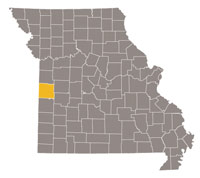
Eight Bates County 4-H horse judgers headed to Columbia, Missouri on Saturday, March 17, 2012, to compete in the State 4-H Horse Judging contest. At the end of the day, the four Senior Division participants Reba Colin, Taylor Fischer, Daisy Miller and Wylie Miller had not only captured the first place prize, but by doing so, qualified to represent the state of Missouri in competition at the national level at the Eastern National 4-H Horse Round-up in Louisville, KY, Nov. 2-4, 2012. Only one team from a state may qualify! The group will now begin a fundraising campaign to help defray the cost of the trip. Anyone wishing to make a donation to the Missouri State Horse Judging team can do so by sending a check to the Bates County Extension Office at 1N. Delaware St., Butler, MO 64730. Checks should be made payable to Bates County 4-H with a memo for Horse Judging.
Food preservation classes will be held in Butler
It won’t be long until many people will have more produce from their garden than they can eat. Spending some time now with that produce willmake you glad you did when the winter winds start blowing. There is nothing like home canned green beans for dinner from your garden on a cold winter night. Better yet, how about a vegetable stew made from your garden produce? Participating in a University of Missouri Extension home food preservation class can help you do that and much more.
Classes will be held at 10:00 a.m., Wednesdays and Fridays, June 13 thru 27 at the First Christian Church, 11 W. Pine in Butler.
June 13- Pressure Canning Low Acid Foods – Be ready to start with fresh green beans and participate in the canning process until we take the jars from the canner.
June 15- How to Pickle- We will prepare and process dilled green beans. We will also discuss how to prepare and process fermented pickles and sauerkraut.
June 20- Salsa From Your Garden- We will prepare and process both a fresh tomato and fruit salsa.
June 22- Jams and Jellies- In this class you will make blueberry spice jam as well as freezer jam. Receive lots of tips on how to make sure your jams and jellies turn out perfectly.
June 27- Freezing and Dehydrating- Learn how to get the very best results when freezing your produce. See what to look for when purchasing a dehydrator. Learn the process of preparing food for dehydration and how to store dehydrated foods. This class is lecture and discussion with sampling.
In all classes participants will receive University of Missouri Extension guide sheets and other handouts so that you will have all of the information you need to get started at home. These are hands-on classes. Come prepared to roll up your sleeves and participate in each process from fresh produce to sealed jar.
Cost of the classes is $20 each or $80 for all five. Pre-registration is required five days before each class. For more information or to register, call Bates County University of Missouri Extension at 660-679-4167.
Defining Alzheimer’s and Dementia
Anyone who has reached their fifth decade has experienced a moment when they have forgotten someone’s name or where they put the car keys. When that starts to happen it is easy to wonder if you are experiencing the first signs of Alzheimer’s disease or dementia. It is important to know what Alzheimer’s disease and dementia are and how they impact a person.
Alzheimer’s disease and dementia are not the same thing, but they are related. According to the National Institutes of Health, Alzheimer’s is a disease that damages brain cells and gradually gets worse. Dementia is a loss of mental function that interferes with normal daily functioning. Dementia is not a disease; it is a group of symptoms that are caused by diseases or conditions.
Alzheimer’s disease is the most common cause of dementia. Vascular dementia occurs after a stroke and is the second leading cause of dementia. These types of dementia are permanent. Dementia can also be caused by thyroid problems, vitamin deficiencies, excess use of alcohol, medications and depression. These forms of dementia can be improved with treatment.
There isn’t a specific test to determine if a person has dementia. Doctors determine whether and what type of dementia a person has by taking a complete health history and assessing changes in thinking and behavior. Functions that doctors specifically look at include memory, communication and language, ability to focus and pay attention, reasoning and judgment, and visual perception.
Doctors can determine if a person has Alzheimer’s about 90% of the time. The only way to get a sure diagnosis of Alzheimer’s is to examine changes in the brain after death.
Berries boost brain power
It is no secret that berries are a healthy choice. For those who worry about losing their memory, there is new research that makes eating berries even more appealing. Even if you are not worried about memory loss, berries still pack a healthful punch for just a few calories.
Researchers have learned that women who participated in the Nurses’ Health Study that ate blueberries and/or strawberries developed memory problems 2 ½ years later than those who did not. Women gained this benefit on just ½ cup of blueberries or 2 ½ cups of strawberries per week.
Strawberries and blueberries are rich in anthocyanins. Anthocyanins are the pigment in plants that give them their dark red or blue coloring. One of their functions is to help move blood into the brain. Anthocyanins have been related to a broad range of health benefits such as vision and heart health.
Researchers have agreed that it may not have been the berries alone that protected the brain health of these women. The women who ate the berries regularly got more exercise than those who did not.
“The great thing about strawberries and blueberries is that they taste great and are very low in calories,” said Tammy Roberts of University of Missouri Extension. Strawberries provide only 22 calories, 5 grams of carbohydrate and provide two grams of fiber for every half cup serving. Blueberries provide 41 calories, 10 grams of carbohydrate and 2 grams of fiber per half cup. Both are a good source of vitamin C.
“It is well established that consuming a wide variety of colorful fruits and vegetables provides many healthful benefits,” said Roberts. “If you are not currently eating a lot of fruits and vegetables, berries are a great place to start.” There are many ways to add berries to a healthful diet: Sprinkle them on your cereal, add them to yogurt, to your favorite fruit salad or substitute them for syrup on your pancakes. You can savor the flavor now and reap the benefits later.
Tammy Roberts, UM Nutrition Specialist
Trees add value to your landscape
Trees can provide your home with shade, wind protection and visual appeal. They can reduce energy costs, provide recreation for children and habitat for wildlife.
Newly planted trees need special attention, and not all trees are suitable for all conditions. MU Extension’s horticulture experts have developed a series of publications to help you choose the right tree and get it established:
G6800, Selecting Landscape Plants: Shade Trees
G6805, Selecting Landscape Plants: Flowering Trees
G6810, Selecting Landscape Plants: Uncommon Trees for Specimen Plantings
G6815, Selecting Landscape Plants: Needled Evergreens
G6820, Selecting Landscape Plants: Broad-leaved Evergreens
G6850, How to Plant a Tree
Don’t guess — soil tests save time and money
Soil testing is the best guide to the wise and efficient use of fertilizer and soil amendments, said Manjula Nathan, director of the University of Missouri Extension Soil Testing and Plant Diagnostic Services.
Whether you grow acres of row crops or have a vegetable patch in the backyard, a soil test will provide you with an analysis of nutrients and a set of recommendations for any improvements.
“We frequently get questions from customers like, ‘I apply fertilizer every year. How come my plants are not doing well?’” Nathan said.
“Most of the time the problem is they never have done a soil test, but have been guessing on fertilizer requirements,” she said. “They do not realize that by guessing they are wasting money by over- or underapplication, and the excess fertilizer can end up in streams, ponds and underground water, polluting the environment.”
Soil testing can be done through the extension office. The cost is $12 per sample. Soil testing publications
Like us on Facebook
Want to know what’s new with University of Missouri Extension? Like us on Facebook at http://facebook.com/MUExtension and follow us on Twitter at http://twitter.com/MUExtension.
Learn about new programs, get news you can use and see how extension adds value to Missouri.